Tom Ginn and his wife Sherry moved into Samarkand in July 2011 from Los Gatos, a leafy residential community south of San Francisco. Before retiring Tom had worked as a software engineer. He was already a serious amateur photographer using a top-of-the-line Canon.
Along with recording the life of the family, including a son and daughter, he was also adding landscapes to his collection. “I haven’t shot a roll of film since 2003; digital photography and the computer give me so much more versatility,” he says.
But those who know Tom appreciate his outstanding patience as he waits for just the right shot to produce a memorable portrait of an elusive insect, a butterfly with its erratic flight or a shy bird as it comes to the bird bath.
The first bird photos were taken over several months at the bird baths behind Ann and Bob Allen’s duplex, located over the fence at the southernmost end of the EastView apartments. The duplex, Oakcrest, has the ideal birding location, sheltered by oaks up the steep slope of Oak Park.
The birds are drawn to the area by Mission Creek and its forest of sycamores and Coast Live Oaks. Ann has arranged a welcoming collection of shallow pot bottoms filled with water, surrounded by mostly potted native plants. When it’s hard to find a good variety of birds elsewhere at the Samarkand, you can count on being rewarded at Ann’s bird baths.
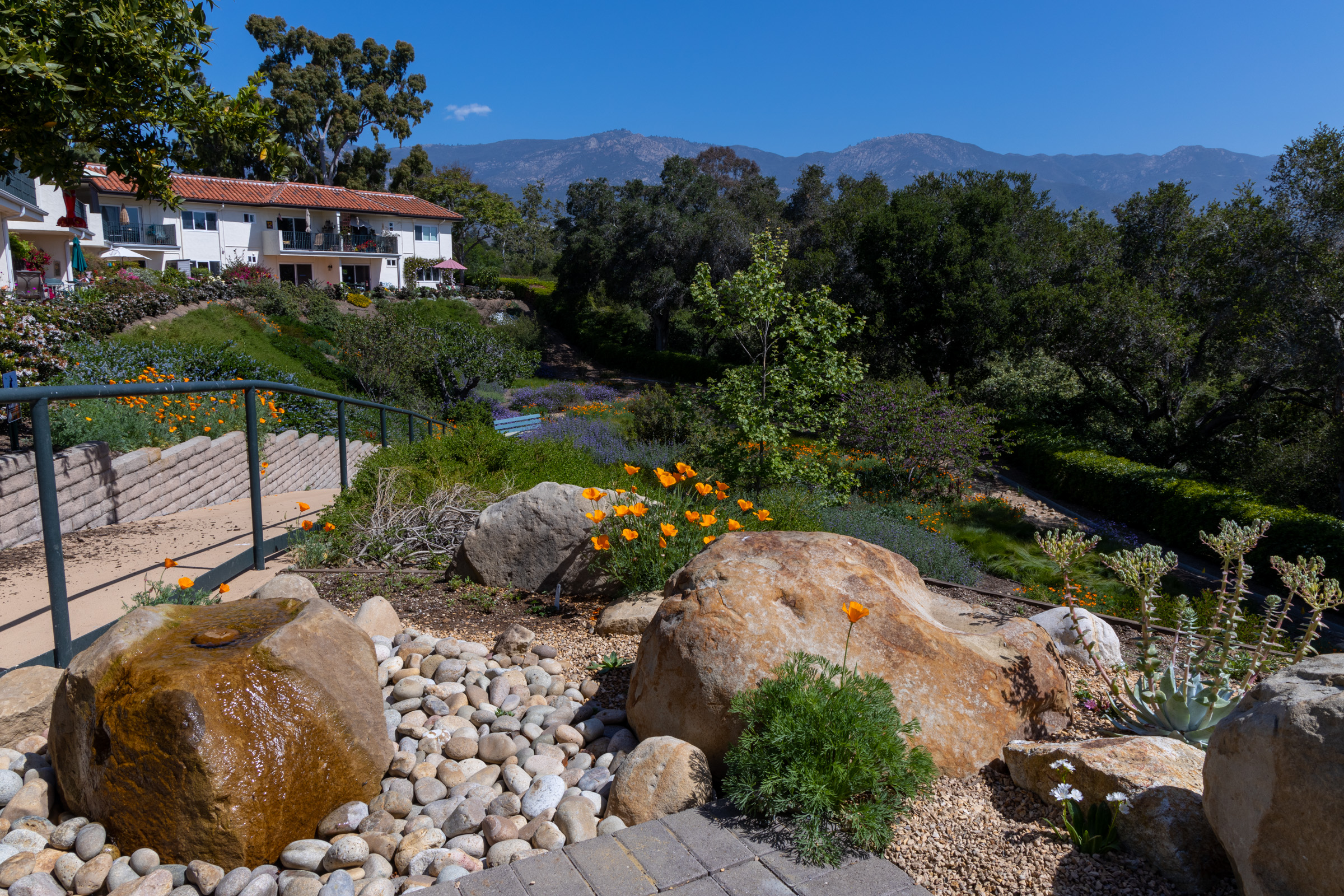
When a large sandstone boulder (over the fence at the top of the Native Plant Garden) became a bubbling bird bath, the birds had a second choice for their drinks and baths. The first group of photos is in Ann’s garden, and the second larger group is at the “Bubbling Fountain.”
The birds are identified by species accompanied by a few comments. Some of the photographs have been made into greeting cards and can be purchased at the Samarkand gift shop.
ANN’S BIRDBATHS

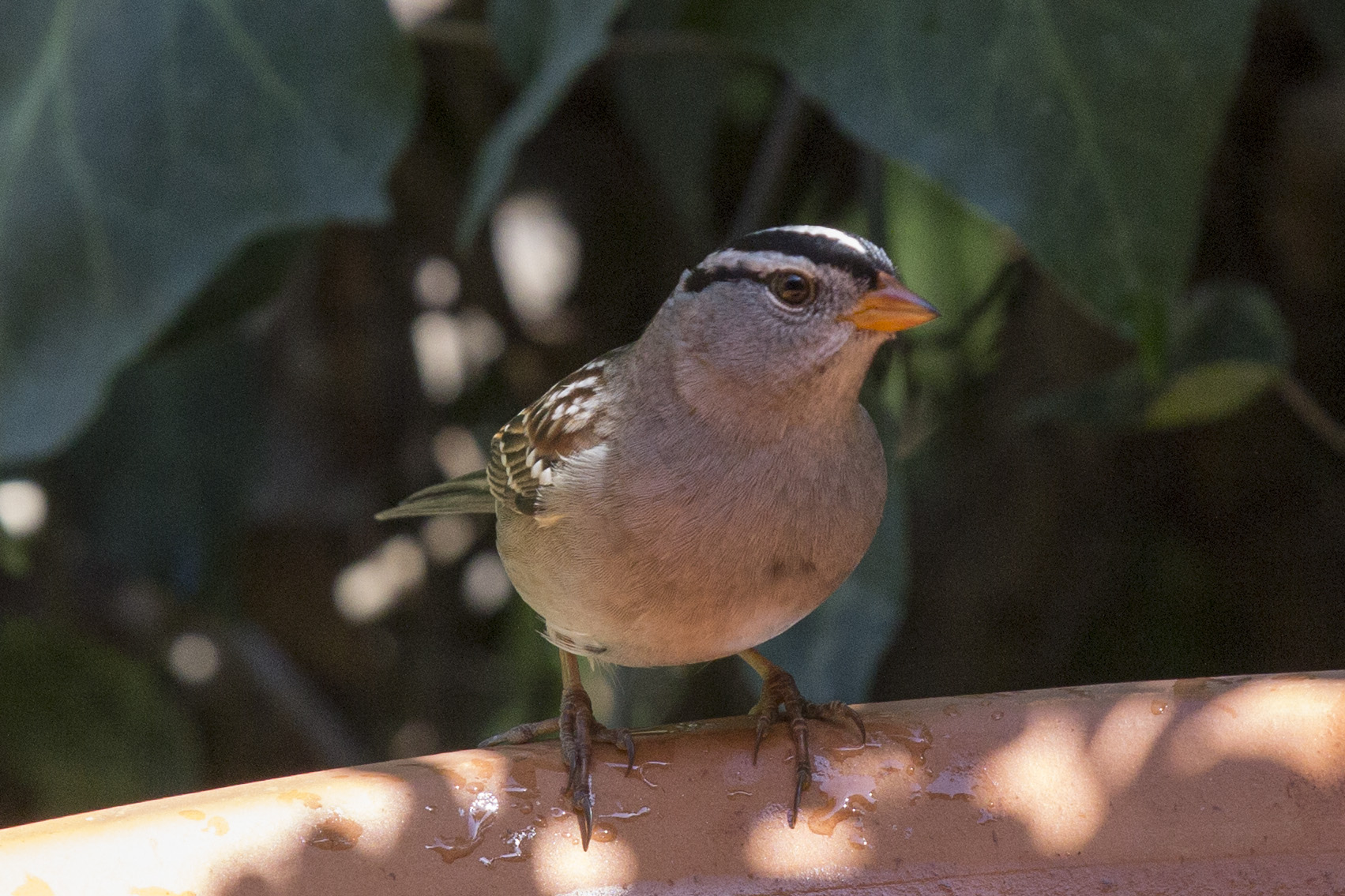

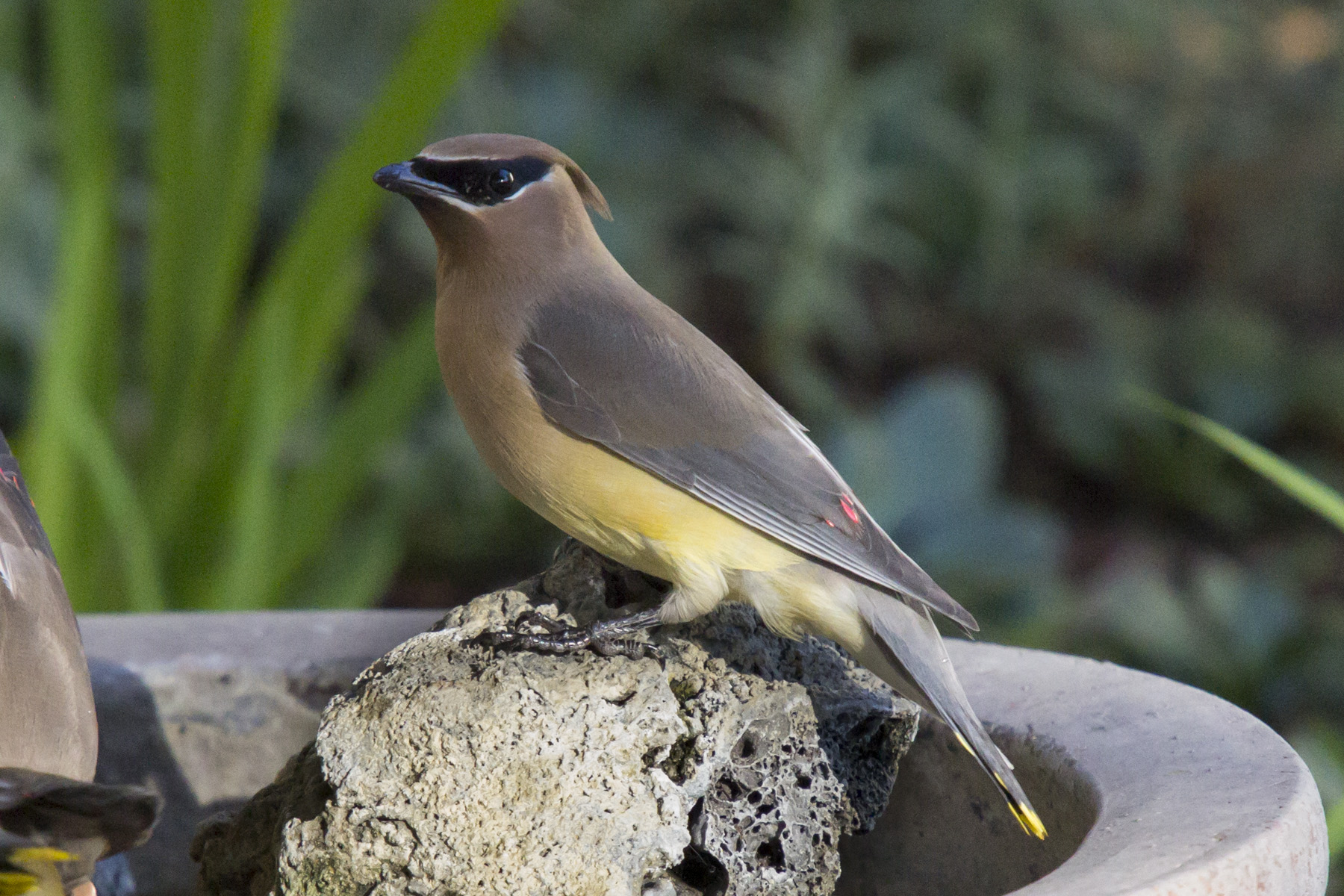


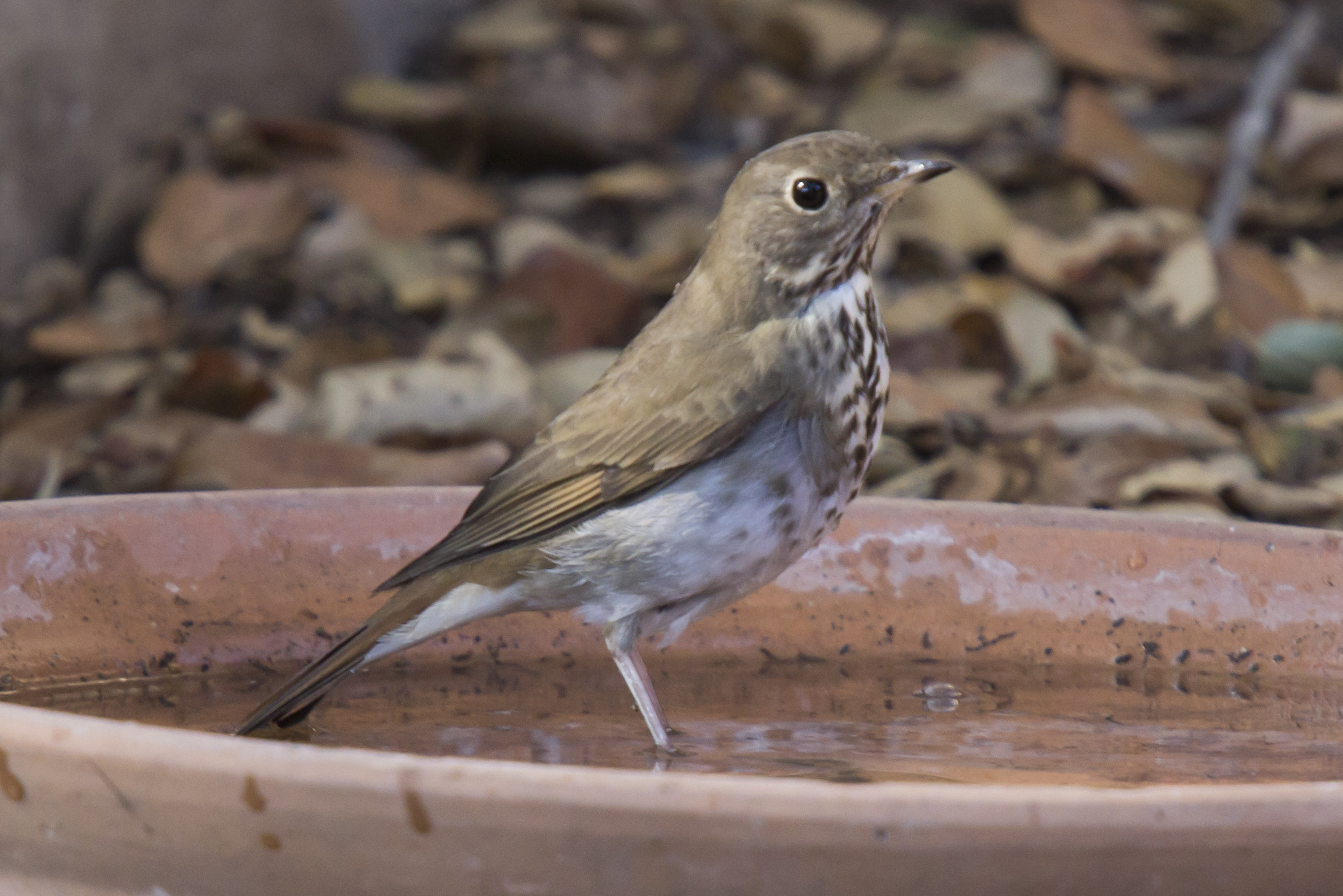
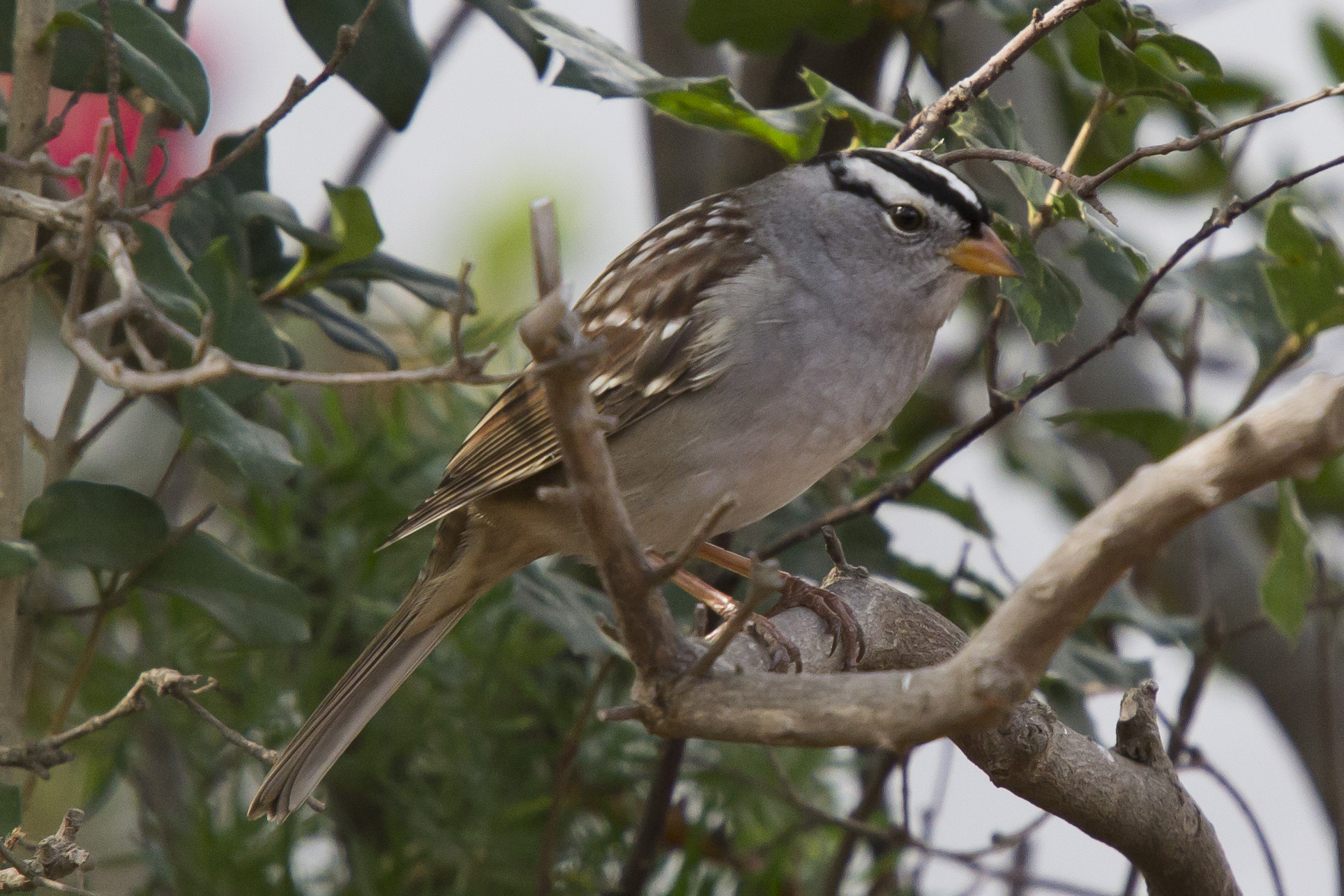
(1) White-crowned Sparrow. A group of these sparrows spend the winter in the Native Plant Garden often singing.
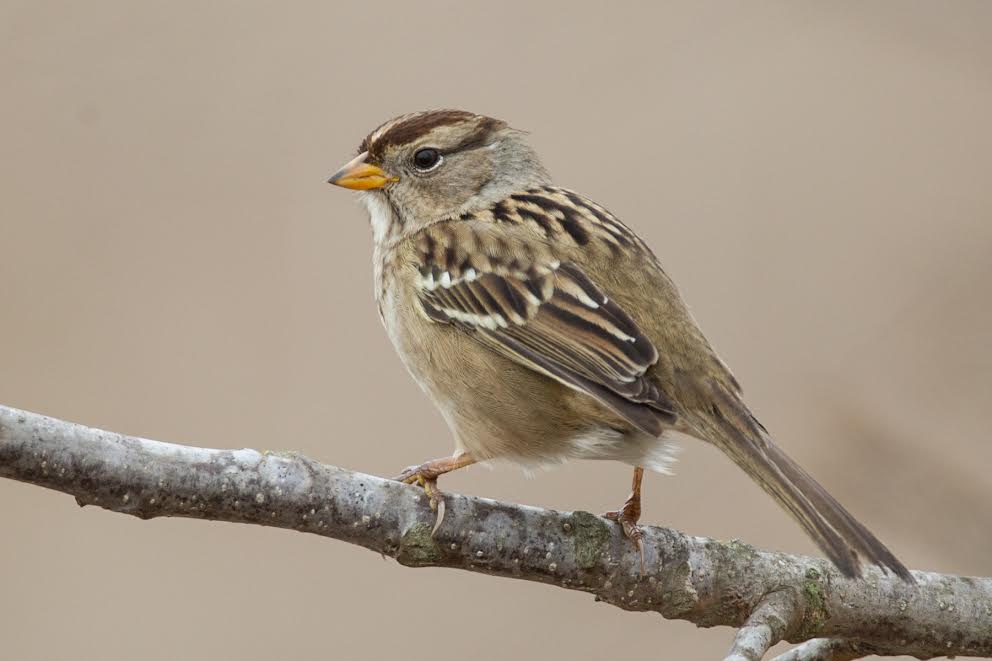
(2) Immature White-rowned Sparrow. In April the group flies to Northern Alaska where they nest in the dwarf willows before returning to our garden in October.
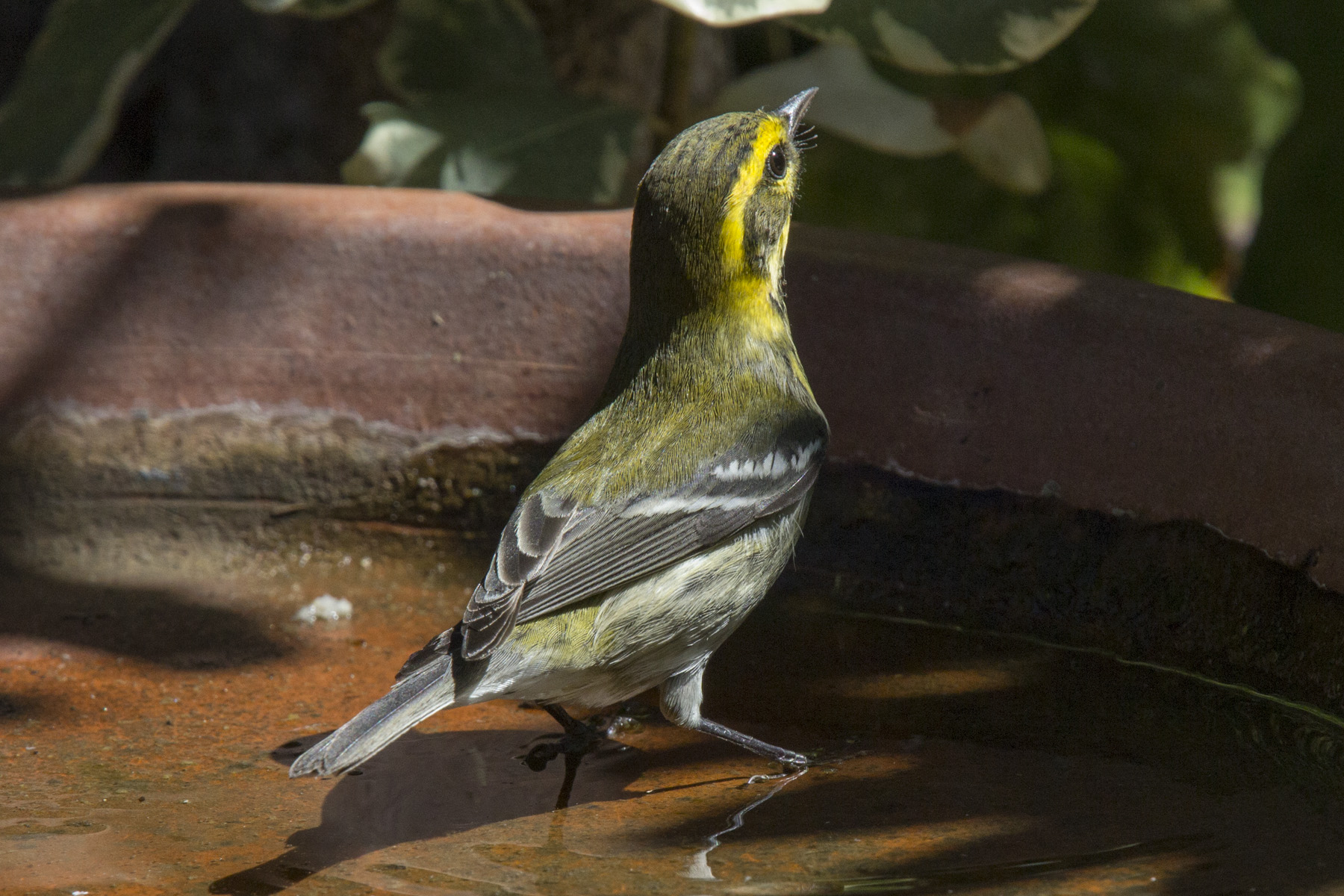
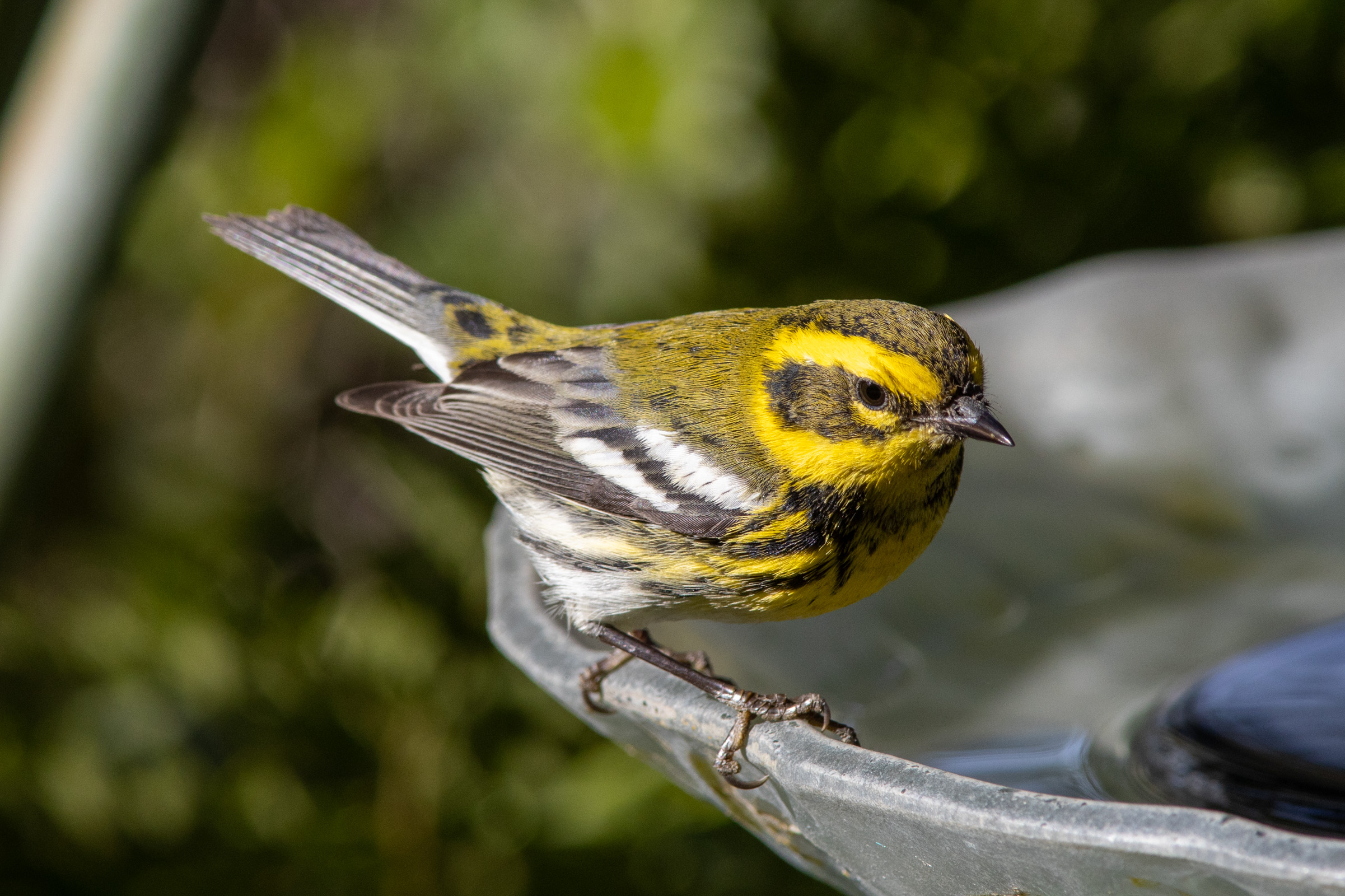
(3)(4) Townsend’ s Warbler. Another winter bird with especially bright plumage.
(5) Orange-crowned Warbler. Year-round bird.
(6) Cedar Waxwing. This lovely bird is a nomad traveling in flocks from place to place in search of berries. They are sometimes in the company of Robins.
(7) Group of Cedar Waxwings. In the spring they will head north to conifer forests where they will briefly breed before heading back on the road again.
(8) Nashville Warbler. An uncommon visitor.
(9) Ruby-crowned Kinglet. A small, energetic bird who reveals his bright crown when agitated. He is another of our winter residents
(10) California Towhee. A big sparrow who is a year-round resident.
(11) Yellow-rumped Warbler. Developing its breeding plumage before heading north.
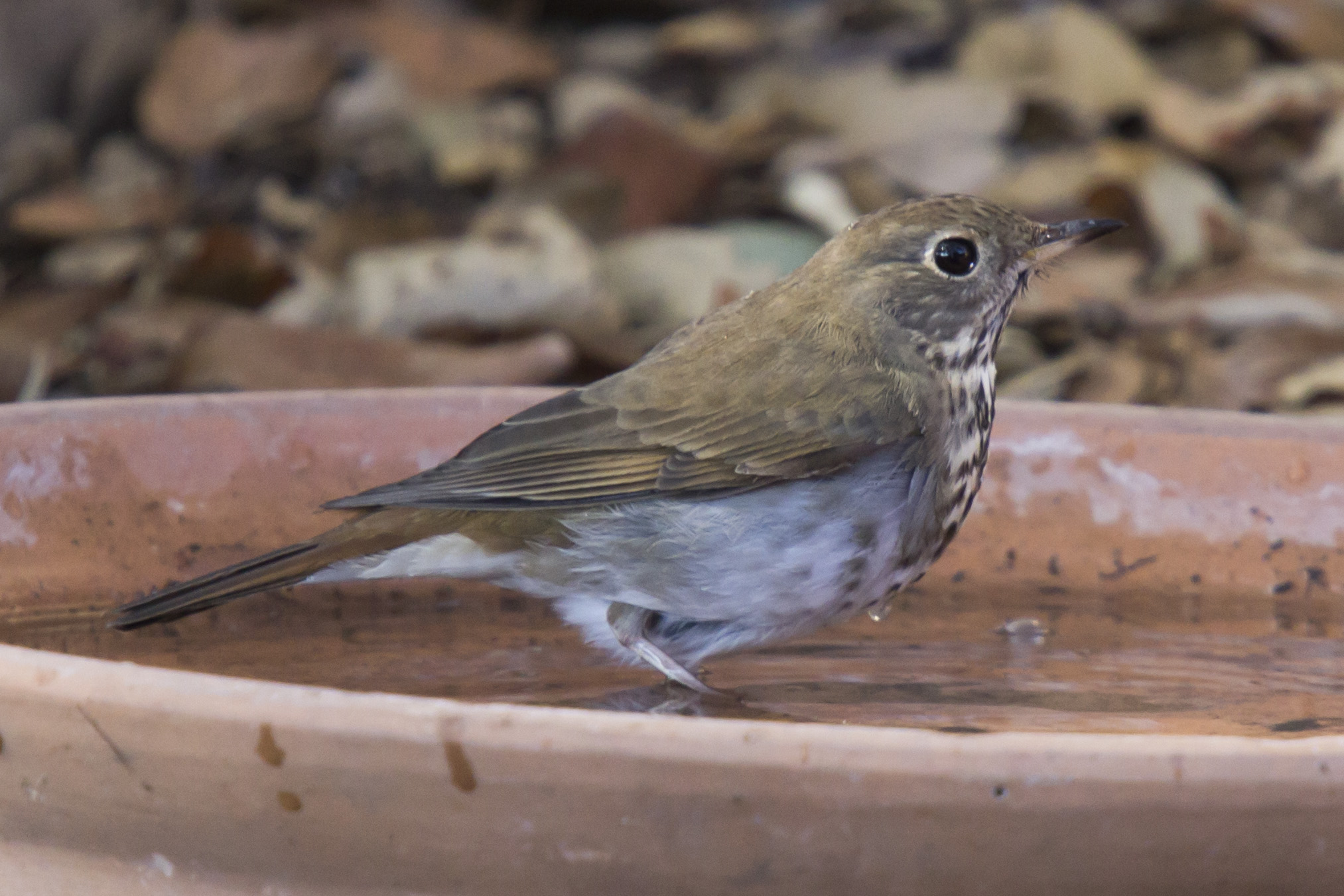
(12) Hermit Thrush Another winter resident who heads for the Sierra in the spring to sing its glorious song.
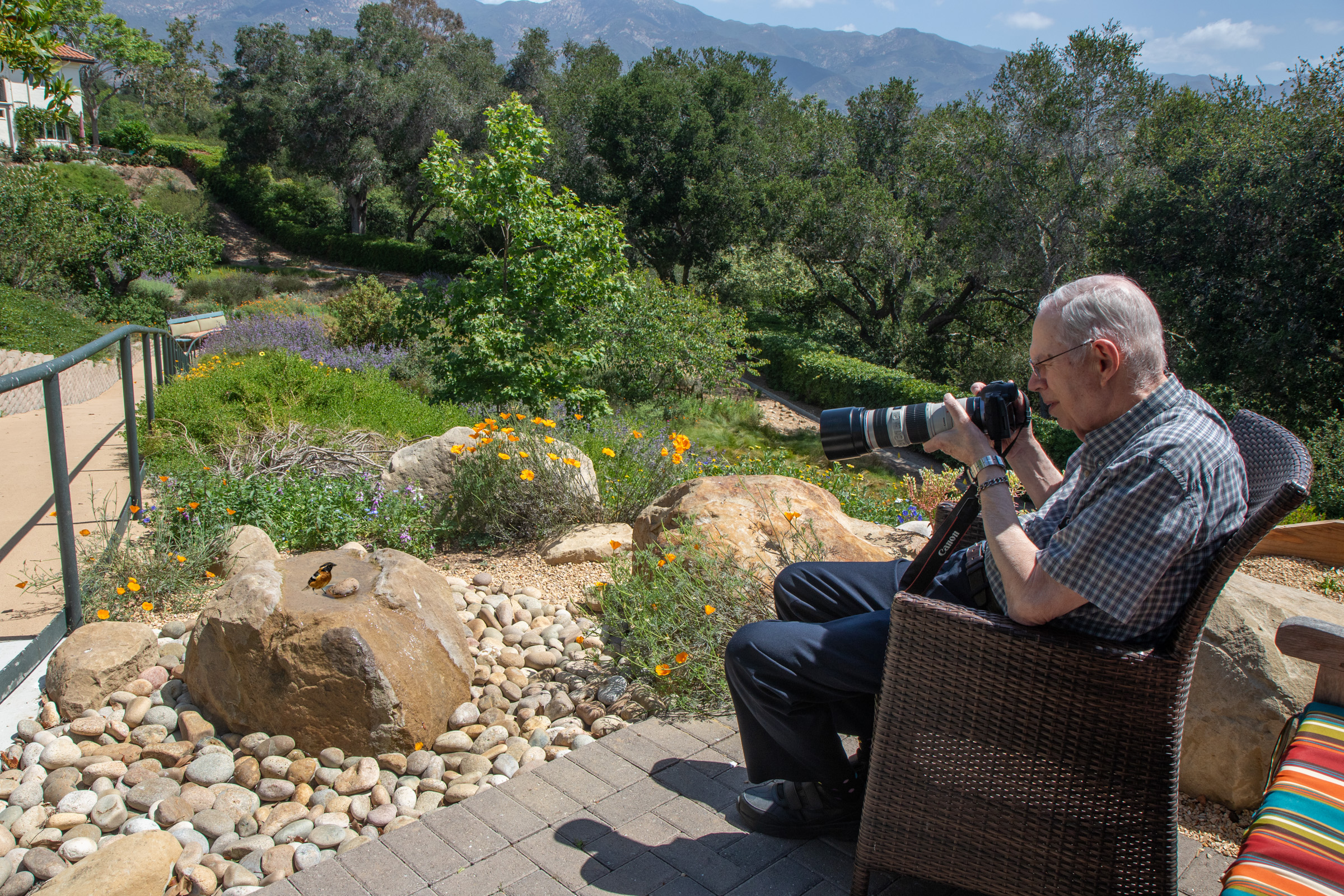
The sandstone fountain, we call “Bubbling Rock” in the foreground overlooks the Native Plant Garden.


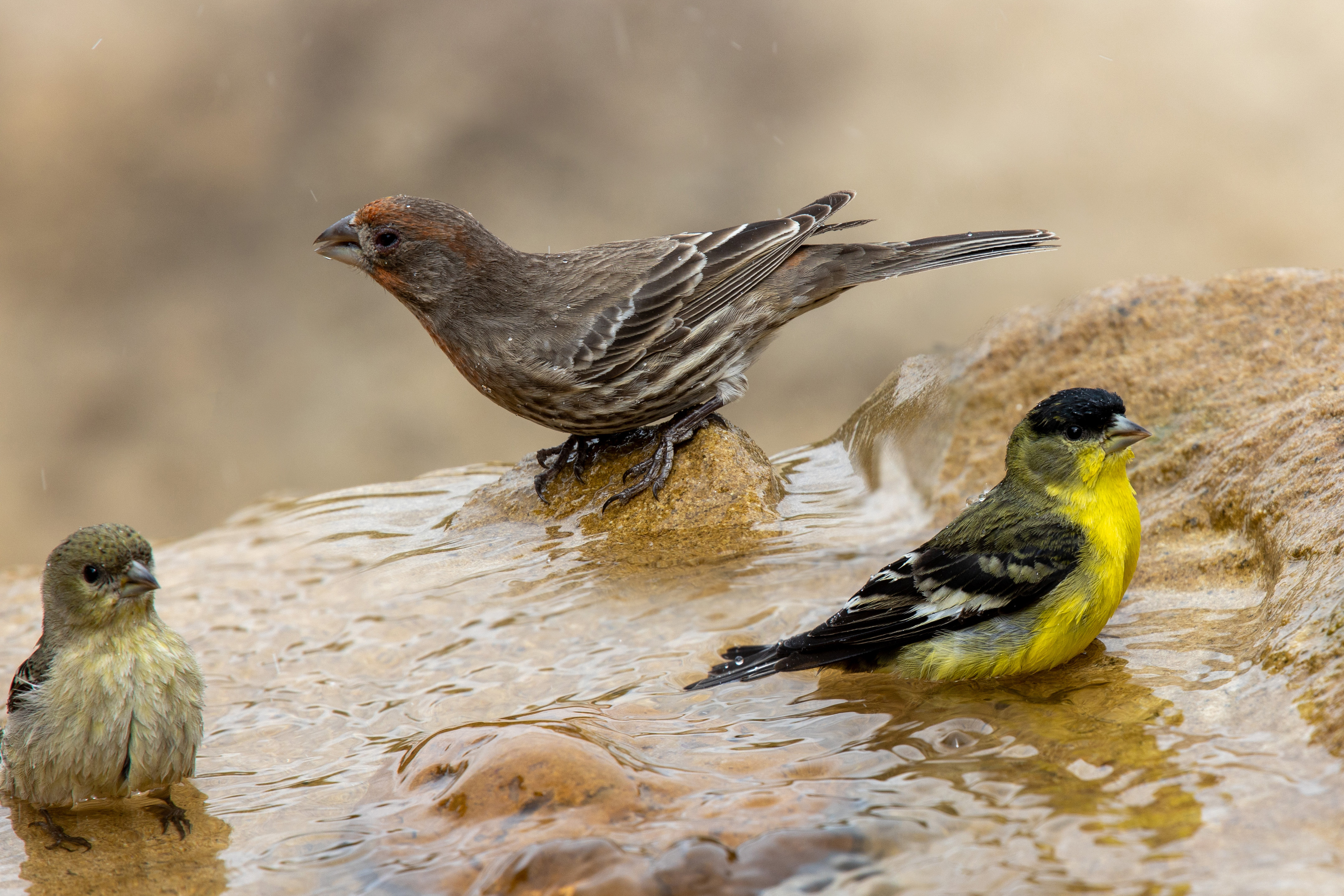

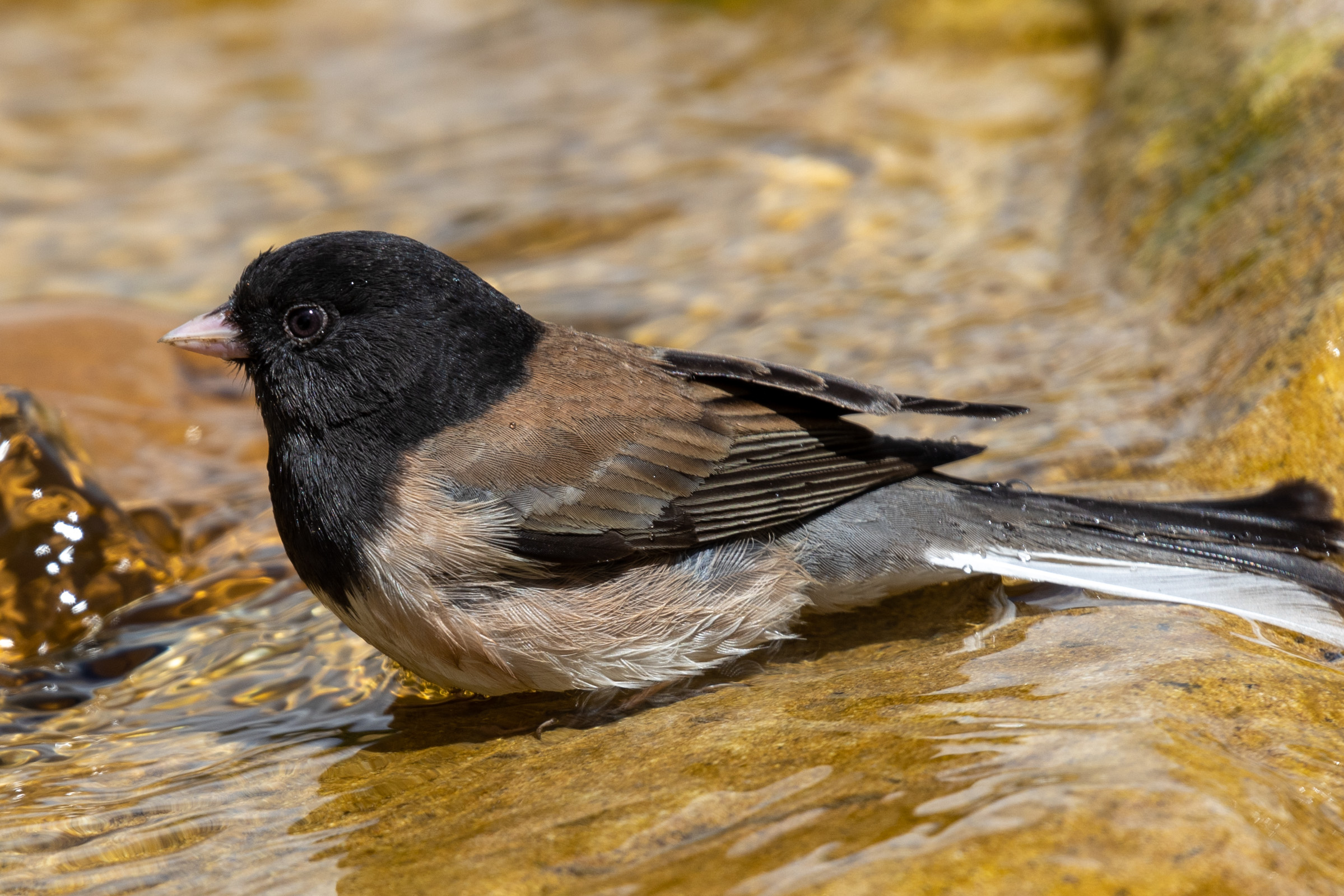


takes a serious bath (7)


(1) The Anna’s Hummingbird is a year-round resident and the largest of our local species.
(2) & (3) Adult, female, and immature Lesser Goldfinches.
(4) Orange-crowned Warbler. Several breeding pairs sing almost continuously above Oak Park at Samarkand in the spring.
(5) Male Dark-eyed Junco. Juncos, who nest on or near the ground, are one of our most abundant species.
(6) Male House finch(L) and Pine Siskin appear to be comparing stripes.
(7) Like the crows, jays are members of the Covid family with similar aggressive ways.
(8) A wet Orange-crowned Warbler revealing its orange crown feathers.
(9) A titmouse will occasionally build a nest in a bird box.
(10) Male Lesser Goldfinch, one of the most abundant year-round birds.
(11) Probably an Allen’s Hummingbird or possibly a migrating Rufous Hummingbird.
(12) Four Nutmeg Mannikins. They are escaped cage birds which have successfully naturalized.
(13) Tom Ginn photographing at “Bubbling Rock”

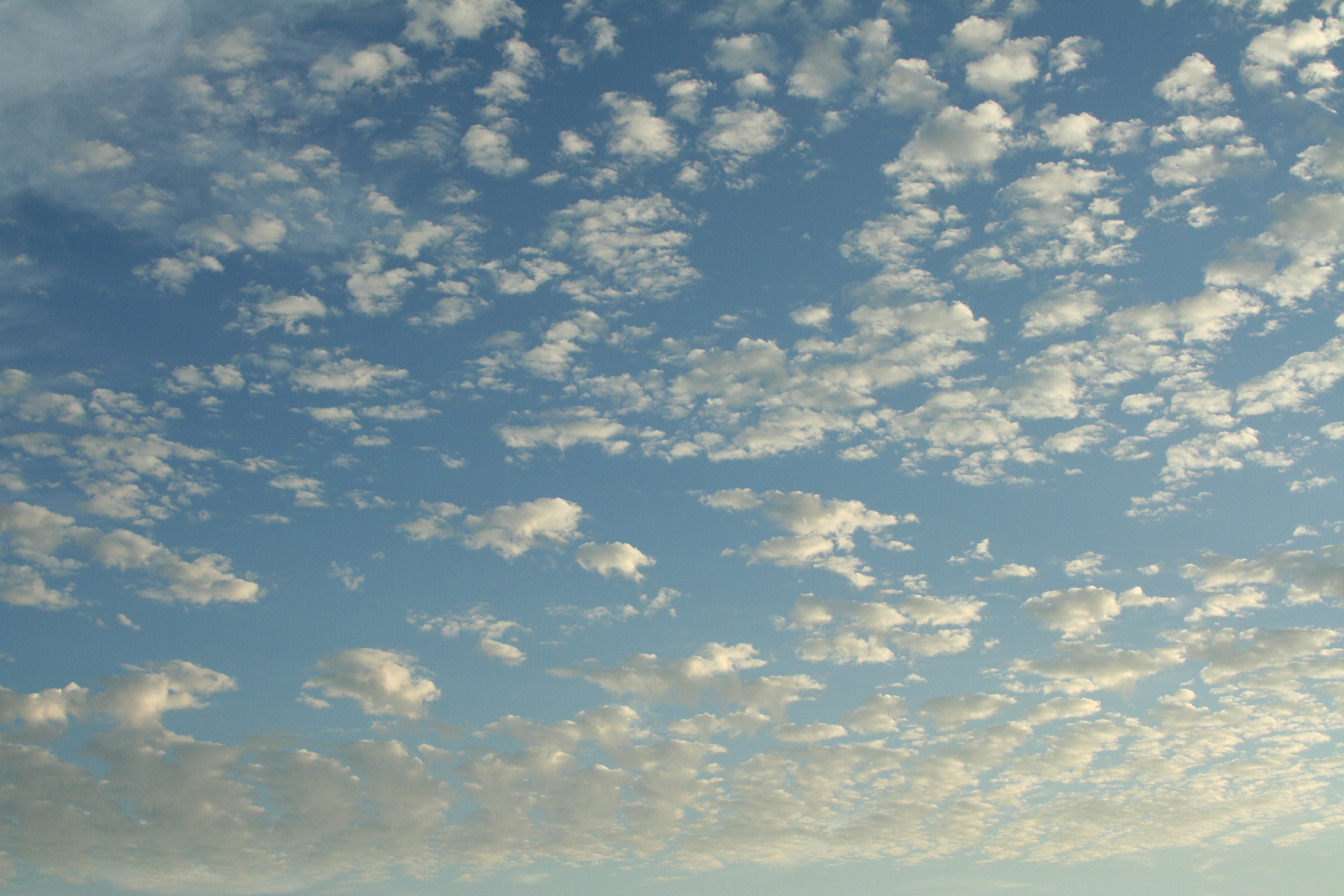

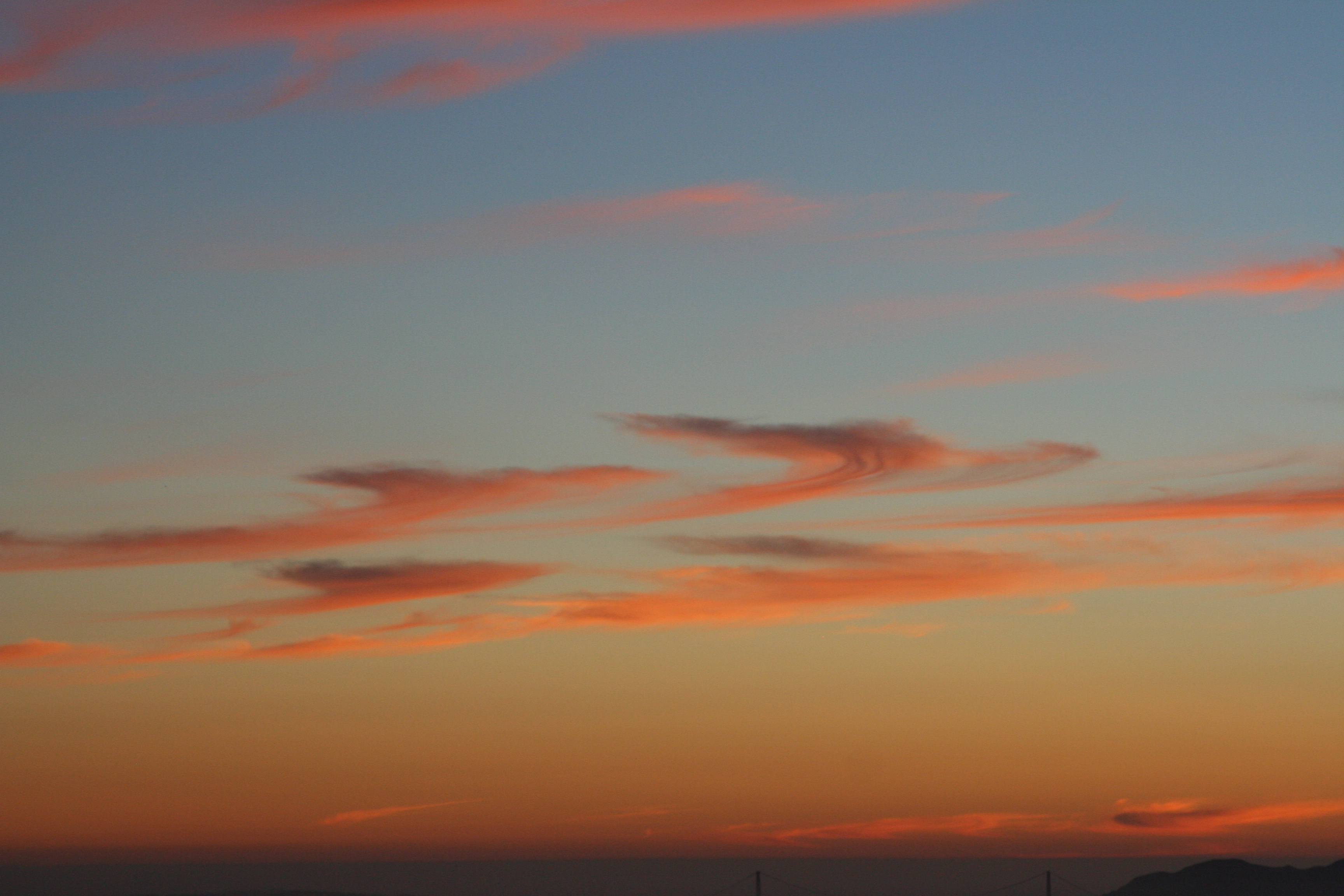



 Take this week – in the middle of October. All day the clouds continued to build up against the mountains. And at bedtime, I heard an unfamiliar sound. Opening the door, I was surprised by rain. Pulling open the window next to my bed, I fell asleep to the comforting sound of rain falling, while breathing in that indescribable fragrance of earth refreshed. The morning that followed was the freshest we’ve had in this endless season of harsh drought.
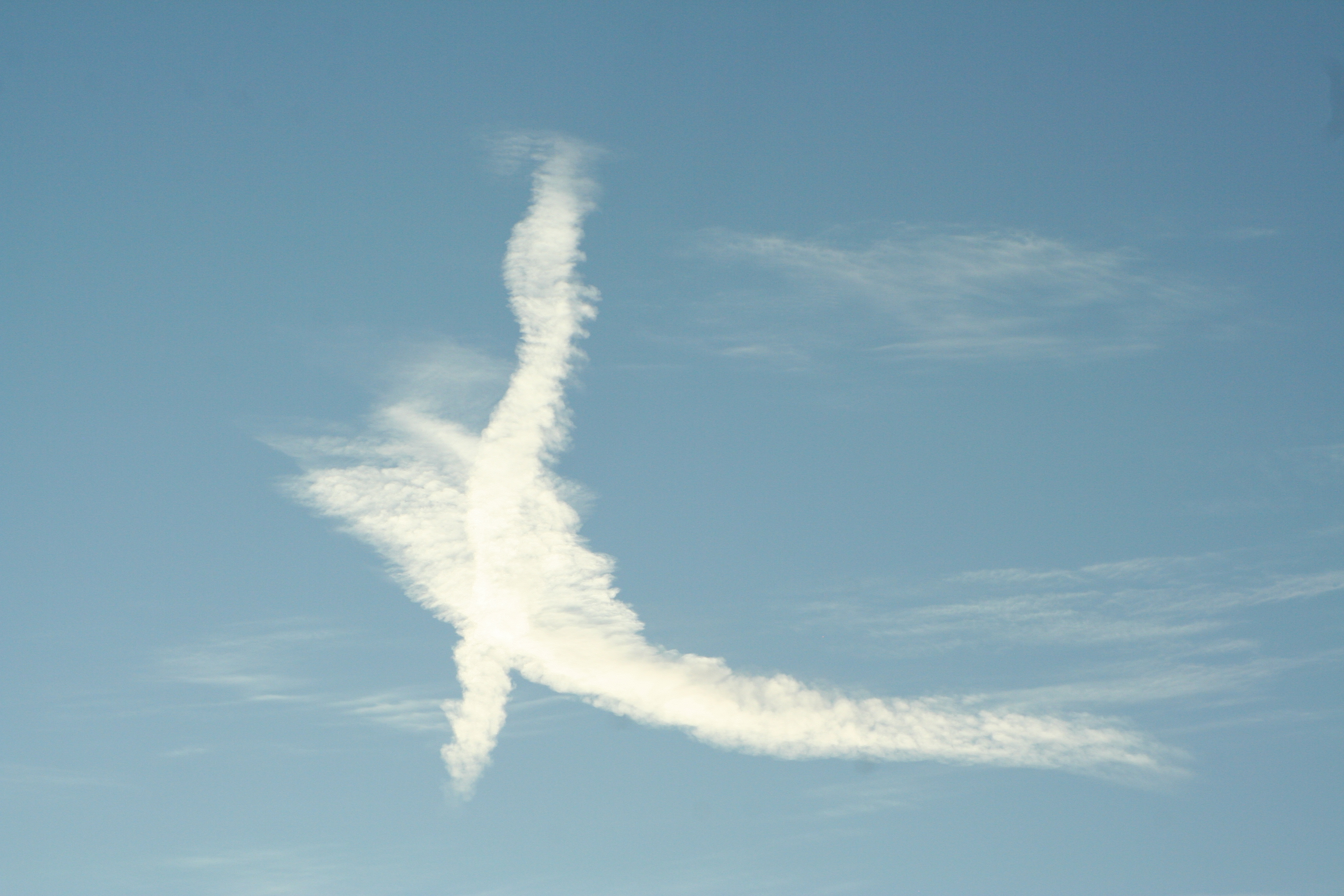
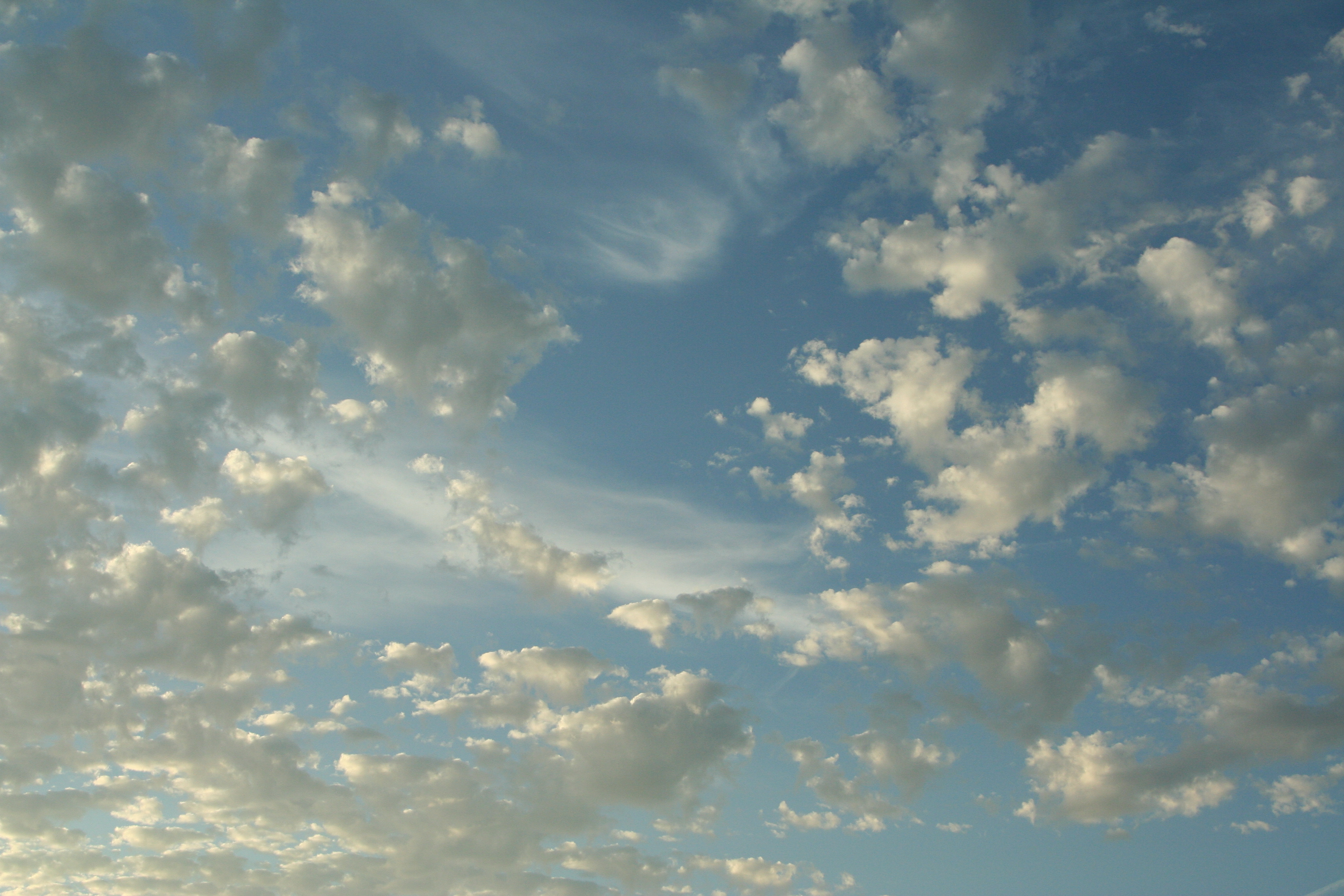 By Wednesday, the temperature rose to 95 degrees, the humidity descended into the single digits, the red fire danger flags were posted. By the weekend the scene changed again. I could joyfully proclaim fall as it should be – a sky full of clouds of every shape in shades of gray and white. I’ve cracked open the door so I can feel the cool breeze and hear the birds as I work on my computer.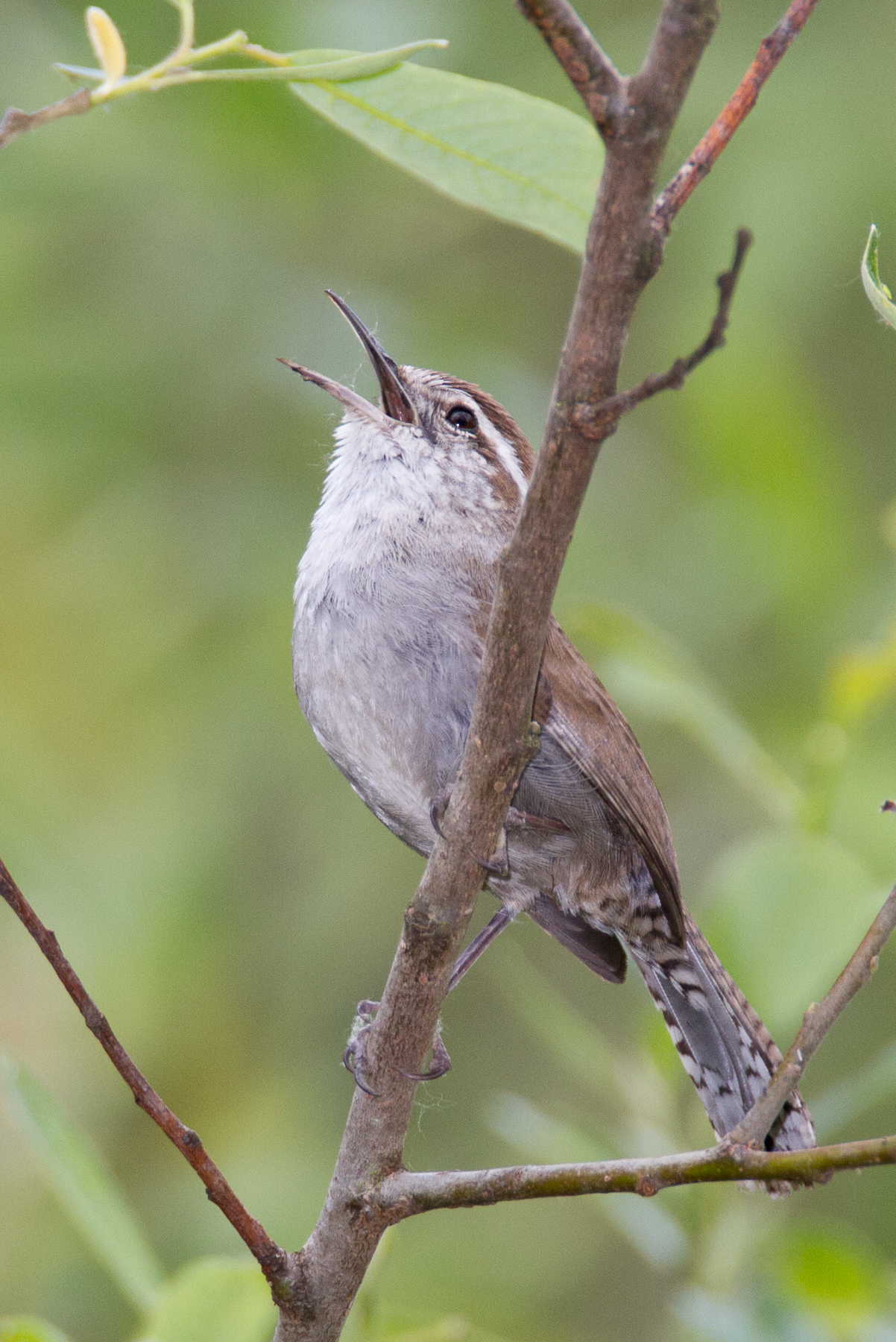


 Yesterday, at the end of the month, the clouds thickened during the day. In the afternoon, a few large drops fell. The air felt dense and heavy, maybe rich in negative ions which some say lifts the spirits.
 Around 3 am, we awoke to a long roll of thunder. For the next hour, lightning and thunder alternated, until the lightning seemed to rip open the heavy undersides of the clouds releasing a torrent which in a few minutes left behind a half inch of rain. At the end of the day, the clouds had retreated back to the mountains.




 Phila Rogers