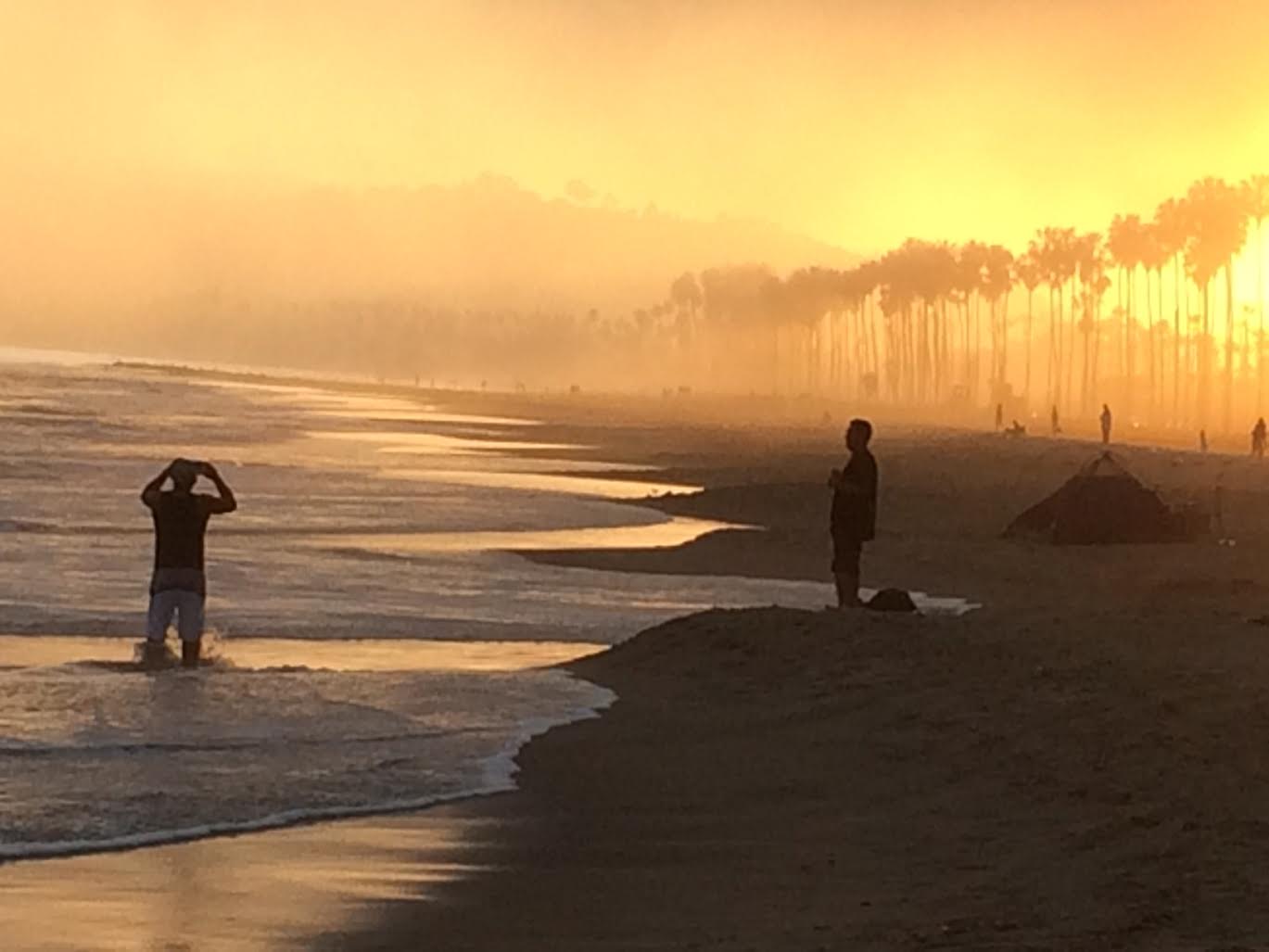
When one of my friends fell on an icy path this morning and Gibraltar Dam flowed into its spillway, the first time since 2011, I decided that winter could not be ignored.

I hadn’t considered writing about Santa Barbara in the winter thinking that the season had been mostly passed by in these years of drought. Then yesterday, December 23, we had a storm that was worthy of qualifying as a winter storm in every way. The day began with a thin cloud cover which built during the morning to promising layers of clouds and brief gusts of wind, which by noon led to rain. After slacking off in a way that I had become used to during these dry years, the rain built again as if to defy my pessimism. By mid-afternoon the rain built to a real gully-washer. I was lucky enough to be in my car so I could enjoy splashing through flows of water at every intersection and best of all, seeing Mission Creek coursing down its creek bed after so many months of being bone dry.
From the sound of my bamboo wind chimes during the night, I knew the storm had passed to the east and the wind had shifted to the north as it does along the coast after a rain storm. The cold wind continues today pushing around remnant clouds, now empty of their contents.
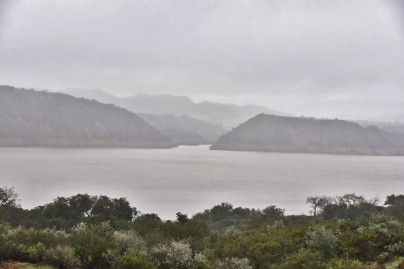
I know storm must follow storm to make the creek a winter feature and the soil be soaked enough to start recharging the depleted water table. Lake Cachuma which lies in the valley between our mountains, the Santa Ynez, and the higher range to the east, is the reservoir which holds our water supply. At present, it’s almost no lake at all, having shrunk to less than 7% of its capacity. Vultures have taken to roosting on the rim of the dam.
December ended with the rainfall slightly above normal.

January was another matter altogether thanks to massive storms brought across the Pacific by an atmospheric river — a new word in my weather lexicon. An atmospheric river can be several thousand miles long to a few hundred miles wide. Drawing up moisture from near the Hawaiian Islands, the warm air can transport large amounts of rain. It’s what we once called the “Pineapple Express.’
The atmospheric rivers produced five days of good rains. At the end of January, rainfall for the month was 8.96 inches rather than a normal 2.86 inches. Even the lawns, most of which were allowed to go brown over the summer and fall, were green again.

The rains continued intermittently until Friday, February 17. The papers were advertising that the biggest storm of the season was on its way. Over the years, I have learned to be suspicious of such a build-up which often leads to disappointment. I believe in sneaker storms – the ones which arrive with little or no advance warning. That may be the old days before sophisticated weather-measuring equipment and computers, which can put together predictive models, eliminated much of the guesswork.
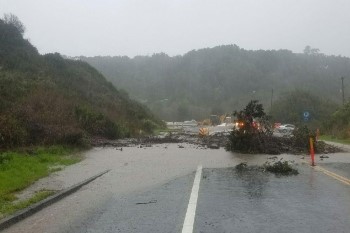
At 5 AM heavy rain was falling, serious, confident rain. By mid-morning the velocity of the rain continued to increase. Coarse and dense raindrops were being driven by gale winds from the south-east. By early afternoon, the rain had slackened enough to allow me to drive down to the Mission Creek just below us. Others had already gathered. Some of us stood on the bridge itself which was trembling with the force of the volume of water pouring a few feet beneath. On the opposite side of the bridge where the stream bed is narrowed by rock walls, boulders were being slammed together. The percussive, booming sounds resembled thunder. Some people, unnerved by the violence, hurried back to their cars. As a fan of such drama, I stayed put.

The storm finally moved on leaving 5-inches of rain downtown and heavier amounts on the mountain slopes. Mission Creek up Mission Canyon left its stream bed and temporarily carved out a new route. Further engorged by a cargo of mud, the stream poured over the old Indian Dam.
The gift for me was that Mission Creek became a real stream, a winter stream which flowed for weeks on end, not just for a day or two after a rain.

Now it’s early April and the creek has ceased to flow. It survived for few more days as isolated pools, until it disappeared altogether. I like to think that it continues to flow underground bringing moisture to the roots of the sycamores and to the other streamside plants.
Rattlesnake Creek, a tributary of Mission Creek in flood conditions.
Credit: Ray Ford
(Please note the material following the video is not part of this presentation.)
 Take this week – in the middle of October. All day the clouds continued to build up against the mountains. And at bedtime, I heard an unfamiliar sound. Opening the door, I was surprised by rain. Pulling open the window next to my bed, I fell asleep to the comforting sound of rain falling, while breathing in that indescribable fragrance of earth refreshed. The morning that followed was the freshest we’ve had in this endless season of harsh drought.
 By Wednesday, the temperature rose to 95 degrees, the humidity descended into the single digits, the red fire danger flags were posted. By the weekend the scene changed again. I could joyfully proclaim fall as it should be – a sky full of clouds of every shape in shades of gray and white. I’ve cracked open the door so I can feel the cool breeze and hear the birds as I work on my computer.



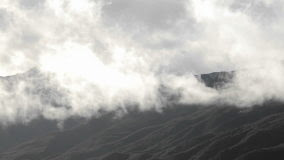 Yesterday, at the end of the month, the clouds thickened during the day. In the afternoon, a few large drops fell. The air felt dense and heavy, maybe rich in negative ions which some say lifts the spirits.
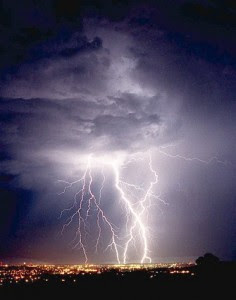 Around 3 am, we awoke to a long roll of thunder. For the next hour, lightning and thunder alternated, until the lightning seemed to rip open the heavy undersides of the clouds releasing a torrent which in a few minutes left behind a half inch of rain. At the end of the day, the clouds had retreated back to the mountains.




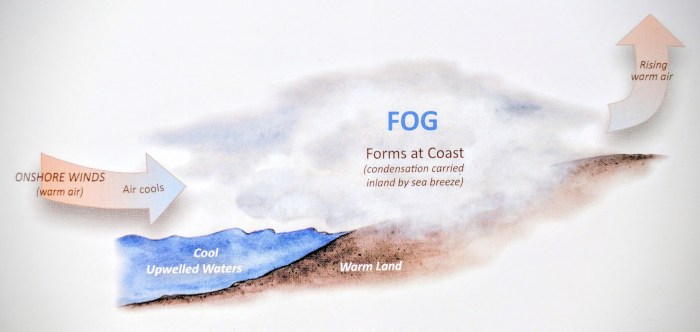


 decreasing coastal fogs when the Pacific High begins to slowly shift south allowing for the possibility of an early rain coming down from the north. Or when humidity sometimes moves north bringing the possibility of a thunderstorm and wonderful cloud effects. Exotic weather heightens one’s senses.
 I’m also reading about how coastal fogs along the north coast have allowed the redwood forest to persist. Once, when the climate was much wetter, redwoods were common over much of the continent. But as the climate became drier and cooler, the redwood forests retreated to a narrow band along the immediate coast of Northern California visited by ocean fogs in the summer.
 ering the Great Central Valley can blot out the sun for days on end until the next rain storm sweeps the fog away for a time. The so-called radiation fog often follows the rain when the earth is both chilled and damp and the drier air above it condenses, forming fog. I remember once driving across the Sacramento Valley at night and I could see that the fog came up to the cow’s belly, leaving its head in the clear.
 up to a hundred gallons a day.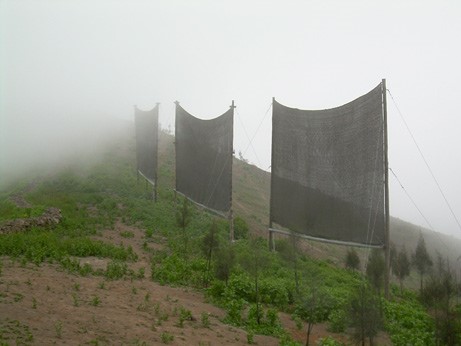
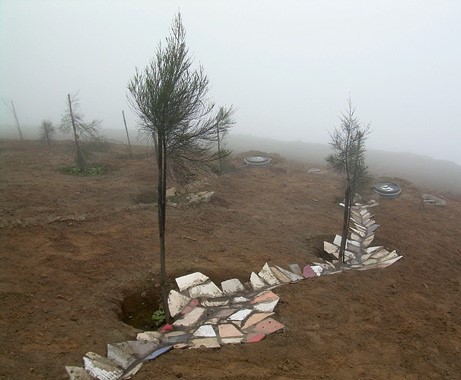 The newly-planted 700 tara trees will be able to eventually collect their own water. Tara trees produce valuable tannin.