
We love our Samarkand campus with its 16 acres of cultivated gardens and trees located on a knoll above Mission Creek with wide views of the mountains.
But there is so much more.
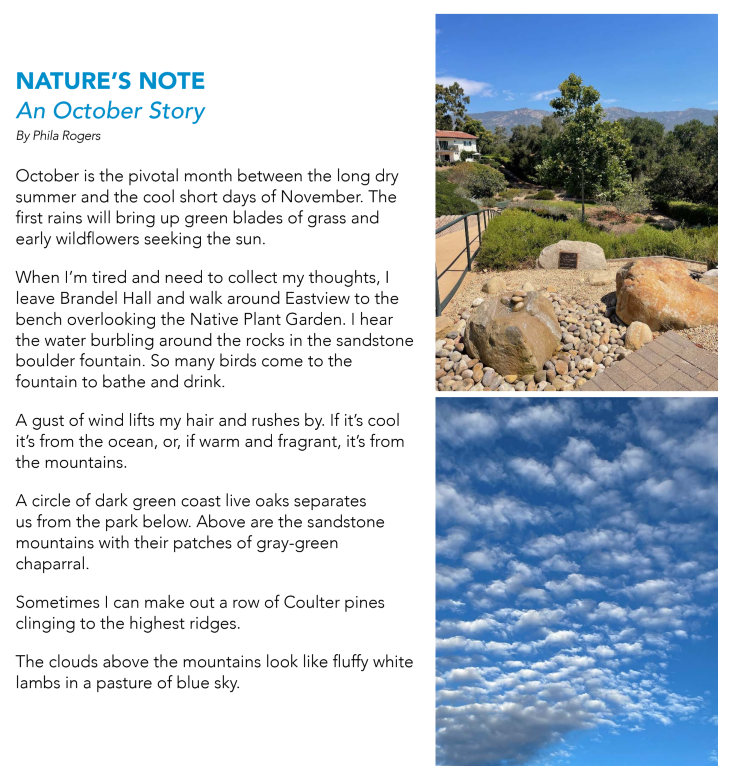
Our one-acre native plant garden captures the floral beauty of coastal California. A fountain made from a sandstone boulder attracts birds to drink and bathe and is a lovely place to sit overlooking the garden with the mountains beyond.
Samarkand is also an arboretum with its 350 trees, many of which are labeled. There is an accompanying Tree Map available in the nature corner in the library. On the self-guided tour, as you linger at each tree, you can imagine the complex system of roots underfoot and the miles of fungal fibers uniting them.
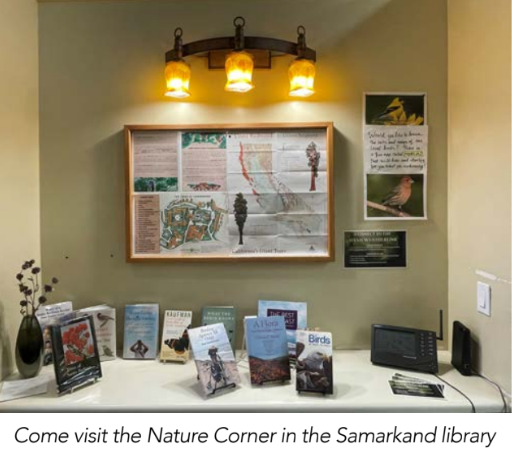
The nature corner in the library features books and field guides on the natural history of our area. You will also find a weather monitor that gives real-time weather specifically for our campus. Our Samarkand weather station is located on the roof of the Mountain Room.
By Ted. R. Anderson
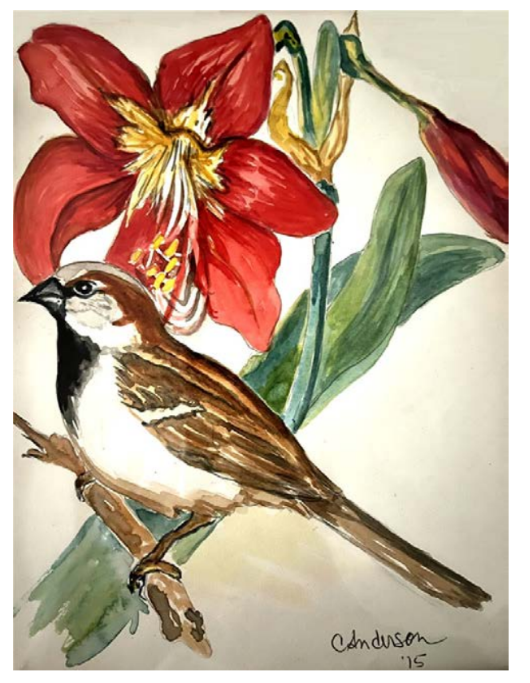 The House Sparrow originally inhabited a broad geographic region stretching across Europe and North Africa and throughout most of Asia except mainland China. It lived in close association with people in both rural and urban communities and is now often referred to as an “obligate commensal” of human beings, meaning that it is dependent on its human neighbors.
When large numbers of people fled Europe in the mid-19th century to live on other continents, many missed their familiar avian neighbors, including the House Sparrow. In the mid-1800s, 100 sparrows were brought to the United States from England aboard the Europa and released in Central Park. With the help of subsequent introductions, the species spread across the continent, making their way to the Pacific coast by 1915. Similar introductions followed in Australia, Argentina and South Africa. Range expansions increased widely from each of these sites so that today the House Sparrow is widely distributed on every continent except Antarctica.
The House Sparrow is not common on the the Samarkand campus, but a lone male does spend much of each day repeatedly chirping near the entrance to our Smith Health Center, hoping, no doubt, to attract a female to his chosen nest site. My favorite place for sparrow-watching, however, is Renaud’s. Carol and I each order one of their fabulous pastries and a cup of coffee and sit in the outdoor patio. There I watch the sparrows hop around under the
tables picking up crumbs that fall to the ground as patrons eat their pastries. Clearly sparrows have good taste!
Ted Anderson is a retired professor of Avian Biology, and the author of “Biology of the Ubiquitous House Sparrow” (Oxford University Press). The watercolor of the house sparrow (above) was painted by Carol Anderson, Ted’s wife.
Phila Rogers is now 96 years old and legally blind. She has decided to occasionaly have some guest columns of which this is one.
It wasn’t that I outgrew my Eastview apartment, with its spacious rooms and expansive views, it outgrew me. With my dimming eyesight, I no longer could see the Mission bell towers and could barely discern the shape of Montecito Peak. From my new apartment at Brandel Hall, I have a pleasant view of trees, south sun, and flocks of musical goldfinches. Instead of woodpeckers visiting my suet, I have overwintering warblers with their more modest appetites.
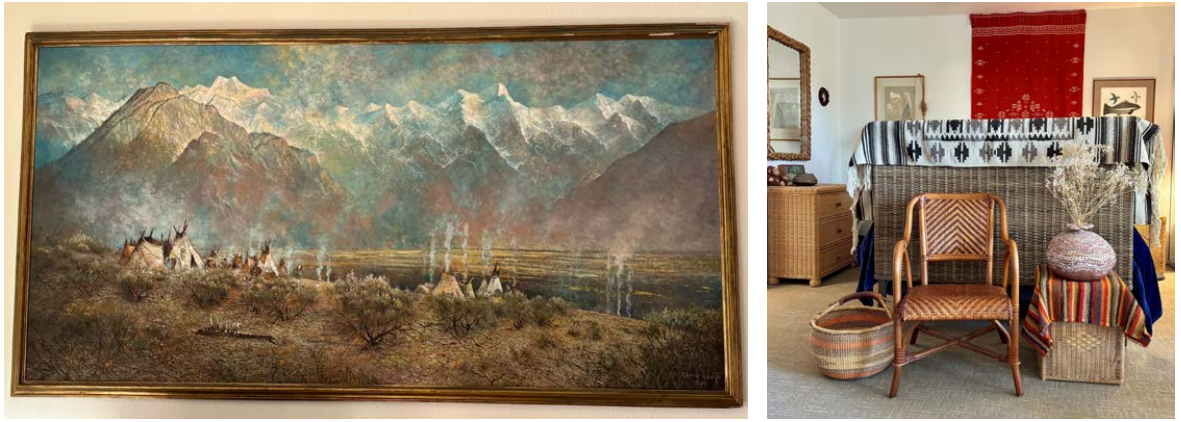
Moving to a studio apartment, gave me a chance to “lighten my load.” I kept my favorite painting of a snowy mountain range with an Indian encampment in the foreground inspiring me to decorate my apartment in a style I call neo-tepee, allowing me to use my collection of hanging rugs, pots and woven baskets.
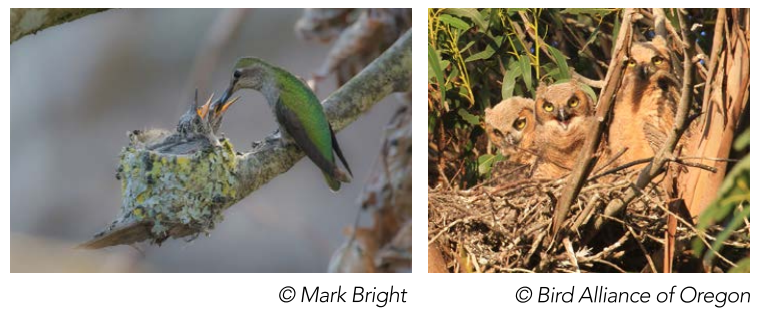
I am not the only January nester. The small Anna Hummingbirds and the large Great Horned Owls also build their nests in January. The hummingbirds fashion their nests from grasses and spiders web decorated with lichens while the owl builds a casual structure from sticks piled up in a tall tree.


I love the wind, the way it animates the landscape by setting trees into motion and sends clouds scudding across the sky. Samarkand is not only a senior living facility, but also an arboretum, with 350 individual trees representing 35 species, many of them labeled. Here I can further hone my skills identifying trees. As Canary Island Pines sift the wind with their slender needles, they murmur and sigh. With their long leathery leaves, blue gum eucalyptus trees sound in a good wind like falling water. The palms are the noisiest of all, and their colliding fronds remind me of the sound of a downpour falling on a metal roof.

Recently, three of us decided to listen to trees in a different way. We engaged retired doctor Bill Macpherson and his stethoscope to hear the sounds produced by both a redbud and a sycamore tree that were each producing a new crop of fresh leaves. Pressing the cup of the stethoscope against the thin bark, we each got different results. Bill heard a sound like water rushing up a pipe. I heard faint popping sounds and a low-pitched gurgle. Ann Allen, perhaps less susceptible than Bill and I, heard nothing. We plan to wait for a hot day and try again.

Shirley Roby was born at Cottage Hospital in 1942. Home was just around the corner near Oak Park. Before she was a year old, she and her parents moved to Hillcrest Road on the back side of the Riviera. The home had generous gardens, a pond and is still the family home, presently occupied by her daughter and husband.
With no school bus serving children in the hills, most mornings Shirley traveled down the hill to Jefferson Elementary School with her father, who was a banker in town. Her mother was a local historian who wrote regular columns in the Santa Barbara News- Press and authored a book about the Santa Barbara Fiesta.
Shirley started playing the violin at 5 years old and, like Alita Rhodes, played in the city-wide summer orchestra and went to YWCA camps at Pine Mountain and on Catalina Island.
After graduating from Santa Barbara High School, she headed north to attend Lewis and Clark College in Portland, which is where she met her husband-to-be, Kib.


The Eastern Sierra drew the family away over the years, first to Lake Mary and then to – Lake George. Later, Shirley and Kib (assisted by their two children) owned and operated the Rock Creek Lodge – at 9,300 feet, a popular jumping-off place for hikers and fishermen.
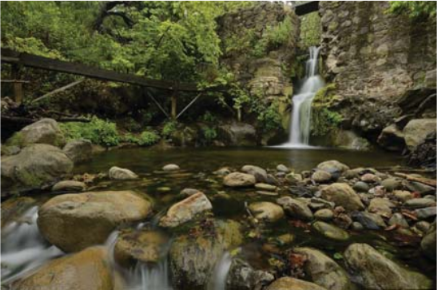
When I got to know fellow Samarkand resident Irene Coker, I learned she had her own Santa Barbara story. Though born in Santa Barbara, she grew up elsewhere, returning when she was 18 years old. But her great-uncles had come to Santa Barbara years before from Italy, working first as gardeners in Mission Canyon and then later as stone masons, constructing walls near the Mission.
It was the talented stone masons from Italy who gave Santa Barbara its distinctive look with their handcrafted buildings, walls and bridges, many made using our local sandstone.
A trip to the Santa Barbara Botanic Garden in Mission Canyon will show you even earlier uses of sandstone. In a climate with a short rainy season, the Mission Fathers realized they would have to store water to see them through the long dry season. You can still see the dam built by the Chumash people in the early 1800s under the supervision of the Mission Fathers. The water was impounded by the dam and later traveled down to the Mission gardens via aqueducts. At the Garden, you can also see one of the immense boulders brought down from the mountains in an earlier debris flow.

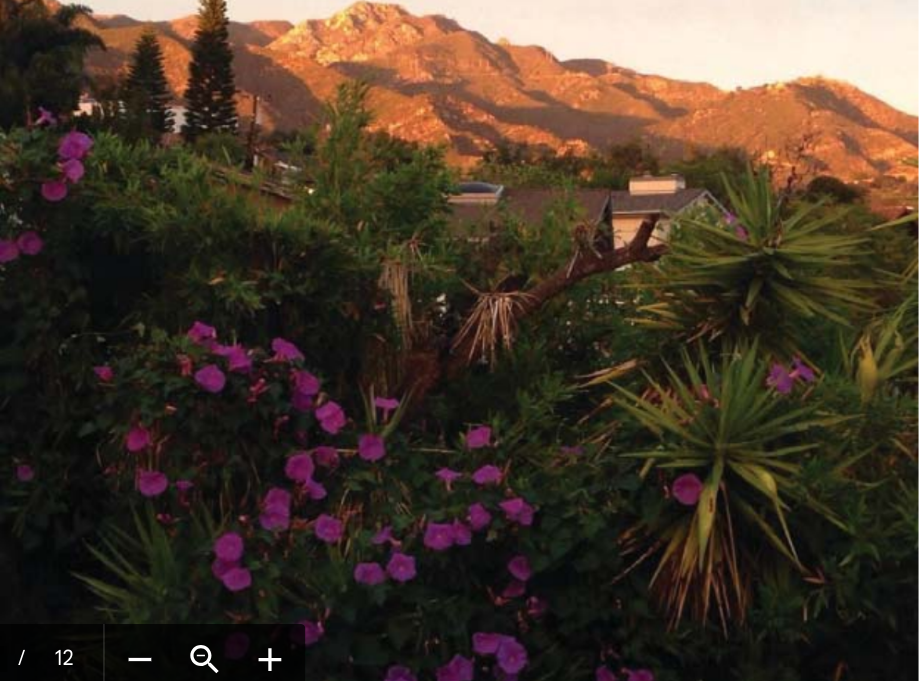
I love the sandstone features all over town, I’m glad most of the sandstone remains on the mountain slopes, because when we walk at the end of the day the setting sun turns the sandstone a glowing orange as if illuminated from within.

Maybe we can’t brag about brilliant splashes of color everywhere like they can back east, since Fall is subtler in California, but there are still clear signs that the seasons are changing. As the days grow shorter, shadows grow longer, giving a rich, baroque look to the landscape. The air achieves a balance between the cool, damp marine flow and the drier air of the mountains. The breeze has a tantalizing sweetness of ripening fruits and crumbling leaves.
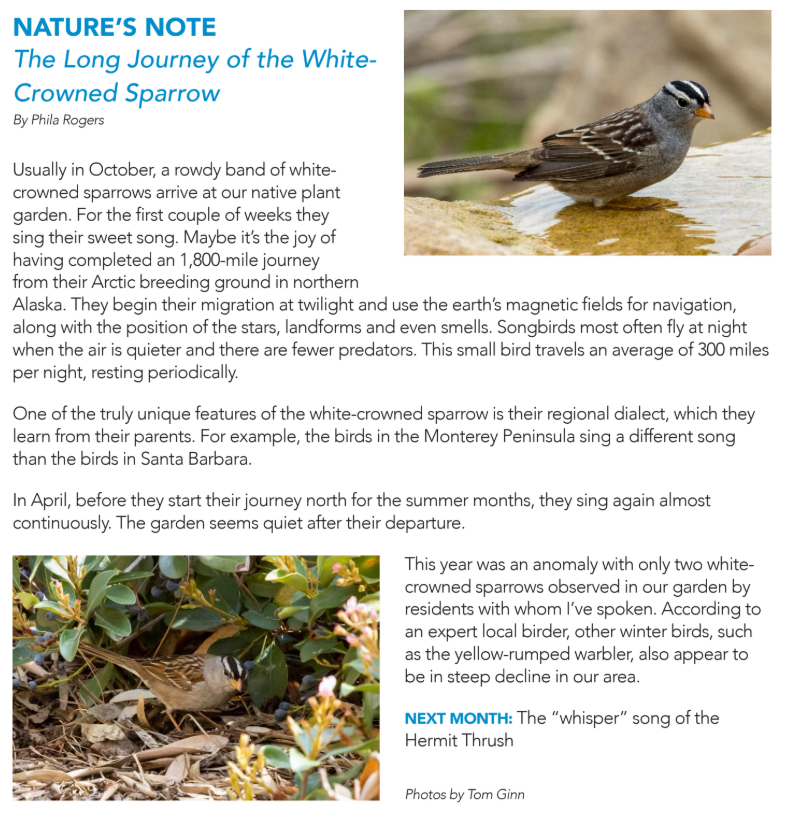
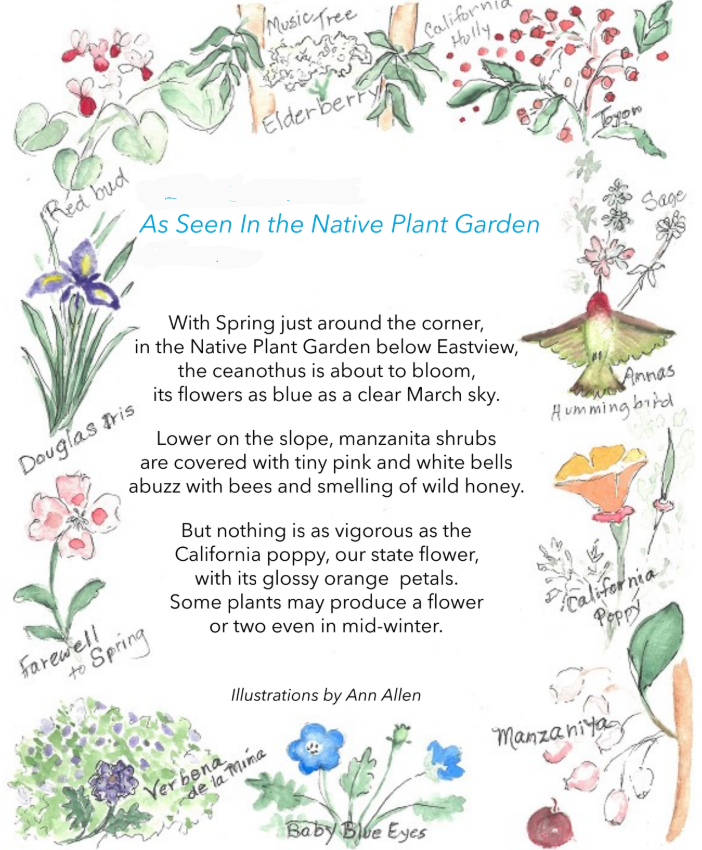
In the Native Plant Garden behind Eastview, you’ll see the billowy bushes of the Toyon, whose succulent berries will be red by Christmas. Further down is the sprawling “Roger’s Red,” a subspecies of the California wild grape. The White-crowned Sparrows arrived in October and fill the garden with their sweet songs.
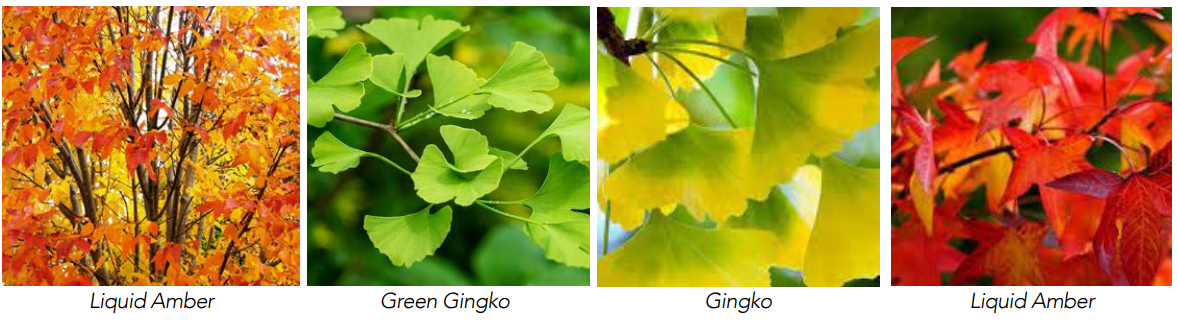
In Oak Park, the leaves on the big sycamores are tawny now. Around town, you’ll see liquid amber trees, with a palette of oranges and maroons, and the ginkgo trees will soon turn a pure brilliant yellow. The lone survivor of an ancient species, these trees shared a landscape with the dinosaurs.
Fall is not just about plants. It’s also about critters—the big Orb Weavers that weave symmetrical webs and then plant themselves in the center waiting for trapped insects. And if you find yourself in the dry country, look for the astonishing sight of tarantulas on the trails in search of mates.
 Phila Rogers