Celebrating California Oaks

Californians love to brag about their trees. We will tell you that we have the tallest, most massive and the oldest trees in the world – the coast redwood, the Sequoia redwood growing in the midSierra and the bristlecone pine which is found in a small area of the White Mountains east of the Sierra.


In my view, we should save our bragging rights for our native oaks – the 20 species (40 if you count the hybrids). some of which only grow in our state. I give my vote to our coastal live oak. This evergreen oak is only found along the coast from Mendocino County to Baja California. The nutritious acorn was the staple food for the Chumash. The women ground the acorns in their stone mortars and rinsed out the bitter tannins in running water. (Now that I’ve found a source of acorn flour, I’m going to try my hand at baking acorn bread).


The coast live oak is the commonest tree species on our campus with three individuals distinguished by their size. One tree, 50 feet wide, spreads across the Life Center courtyard with a luxuriant canopy of small leaves; a second is located in the large lawn below Westview and Northview; and the third, the largest, is next to the Rose Garden with an 80-foot-wide canopy and a stout trunk measuring ten and half feet in circumference. Most often, the oaks are sprouted from an acorn buried by a scrub jay and then forgotten about.


Thank you, Jesus and Pedro for measuring the circumference of the three largest oaks!

All The Work They Do

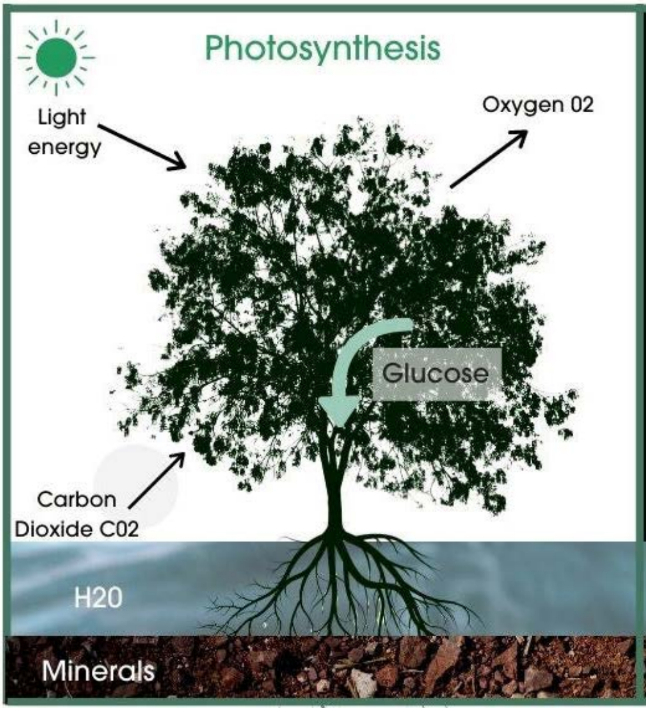
Last week several of us walked the campus doing a rough count of the trees. We counted 353 individual trees representing 38 species. One member of our group researched the carbon dioxide capture (“sequester”) for many of the species we identified. The amount of carbon dioxide absorbed varies with the type of tree, but overall, the trees at Samarkand capture at least 8 tons of carbon dioxide each year while releasing over 6 tons of oxygen.

Through photosynthesis, leaves do some of the work by pulling in carbon dioxide and water, using the energy of the sun to produce the sugars that build trunks, branches and roots. Oxygen is released as a by-product. One large tree can provide a day’s supply of oxygen for three or four people.

The carbon dioxide that trees capture helps clean the air by removing this heat-building greenhouse gas with its negative effect on our environment. Some of the carbon dioxide is released over time when discarded leaves decompose or when a tree dies and decays.

At the risk of being called a “tree hugger,” hug your favorite tree anyway and thank it for all the work it does for you. And take a deep breath, pulling in some of that life-giving oxygen.

The Trees Of Samarkand

How many of us chose to spend our final days at Samarkand because of its natural beauty? The 16-acre campus occupies a knoll above Oak Park with splendid views of the Santa Ynez mountains.

Canary Island Pines

With the manicured gardens of sub-tropical plants and its native plant garden, it is the trees that command your attention. Along with the California native Live Oaks, there are some 25 different species of trees on campus, and according to John Campbell, 100 individual palm trees. Joyce and Allan Anderson came up with the excellent idea of labeling the trees along the walkways with raised signs and lettering large enough to easily read. We hope to produce a pamphlet with more information about the trees that would be interesting to those taking a walk.

In the meantime I’m spending time with individual trees, listening to how the wind gives them a voice. Under the Canary Island Pines, it is a sweet humming. Listening to the Fan Palm can sound like rain falling on a metal roof. I invite you to listen, too!

For more about trees, go to philarogers.com

September 22, 2022

 This is one of the noteworthy days of the year, the fall equinox and the first day of fall. Like the spring equinox six months from now, day and night are roughly equal in length.  The Bewick’s Wren is singing a more joyous song and the Oak Titmouse sings a combination of their spring halleluiahs with their raspy call notes.  Nothing will come of it, of course, and the days will continue to grow shorter by two minutes a day until we are jolted by darkness falling by 7 PM.

In Santa Barbara on the south coast, a 100 miles west northwest of Los Angeles, fall doesn’t really show up until October, when the California grapevine turns red on the fence and the winter birds show up in the coastal gardens.

Golden-crowned Sparrow

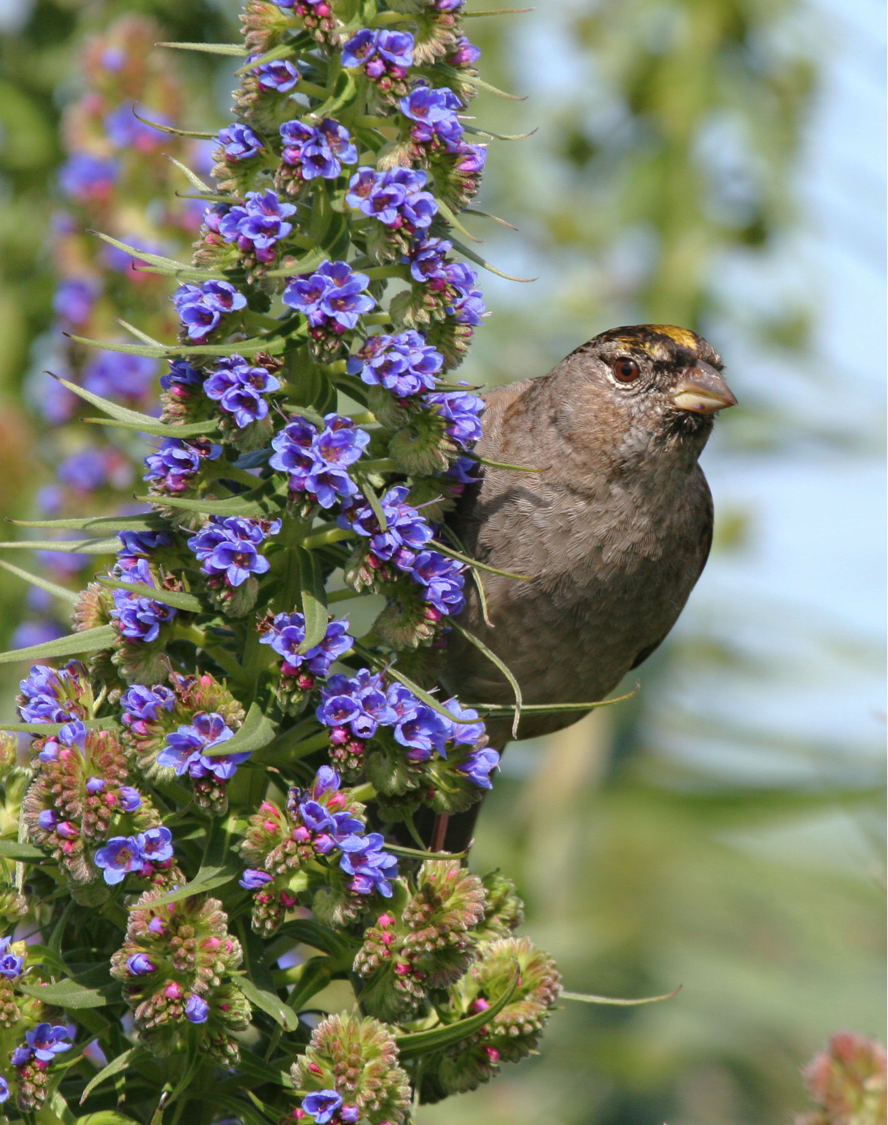
Over the last few days, Bay Area birders are plucking my heart strings by reporting the first Golden-crowned Sparrows of the season. I remember those chilly mornings in the Berkeley Hills when I would walk up the street towards the pasture whistling their song. If they had arrived in the early morning hours after a long night’s flight, they answered me with one or two minor key notes.  I would yelp with joy and dance a quick jig.  When I returned home, I made an entry in my notebook, circling the date in red.

 It would be a few more days before the little flocks worked their way into the neighborhood to settle into their winter territories. I wondered if these birds were the ones that had come last year and maybe several years before.  The good news was that they remained until mid or late April, developing the bright yellow crown, before departing for the far north.  During the winter you could count on them singing just before it started to rain.

As far as I know there are no golden crowns in this neighborhood or even in Oak Park.  They are most often reported in weedy fields in open areas like the upper Elings Park.

A single mature male has spent the summer feeding with several Song Sparrows in a clearing near Los Carneros Lake.  Apparently, it declined to join the others of its kind for the migration north in April. Was he damaged in some way or simply lacked the normal instinct, the irresistible urge to migrate?

Hearing the Western Tanagers on the move, I will start listening for our winter birds, though I know it’s probably too early.  I arrived at Samarkand as a reluctant migrant from Northern California at this time nine years ago.  It was during the lull between the seasons. I was disconsolate. I looked for one familiar bird. Finally, there it was — a California Towhee scratching in the leaves alongside the pathway.

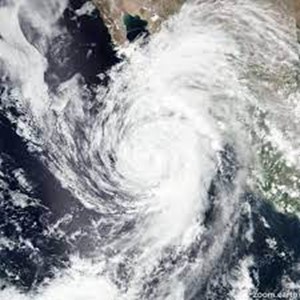
Satellite image of Hurricane Kay

Something did arrive early this year, a substantial rain but with hardly a sprinkle here.  Elsewhere, it was enough to signal the annual nuptial flight of the termites when some of these subterranean creatures grow a pair of gossamer wings for a day’s fling above ground in the bright air. The queen ascends high in the sky pursued by ardent males eager to mate with her.  Then as quickly as it began, it was all over and the termites resumed their lives in the dark with a pregnant queen, leaving behind a shimmering carpet of discarded wings. 

Credit: Sylvia Casberg

I had assumed this early storm was like the ones to follow, moving down the coast from the north.  But the cause was Hurricane Kay, an extensive, well-organized storm which had originated off the coast of Baja California, slowly weakening as it moved north to bring varying amounts of rain.

Nature sent us a consolation prize though — a double rainbow which felt more like a gateway to grander things.

Nancy Keele and Her Garden

Nancy Keele and
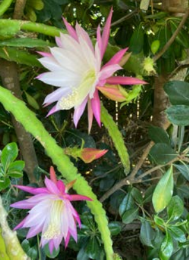
Orange Sherbet Epiphyllum

Nancy Keele lives in one of the cottages referred to as a Southview villa.  Unlike most residents at Samarkand who have either a balcony or a small patio, Nancy has both a small front yard and a rear garden which includes a handsome Canary Island Date Palm where she raises her Epiphyllums.

As told to Phila Rogers (SamNews September 2022)

When I look out into my beautiful gardens, I can’t help but think of my mom, and her influences on my life. She gave me my first two Epiphyllums (“Epies”) and put me on my first pony. As I grew older, to help me develop talents, she agreed to take me horseback riding monthly if I practiced the piano daily.

As an adult I fell in love with the Epies; my collection numbering above 100 before my move to The Samarkand.

Mystic Mood

I fulfilled my dream of having a horse by owning a 13-acre ranch on San Marcos Pass where I bred, raised, and trained Arabian horses. I exhibited in many shows throughout California.

I was the Choral Music director at Santa Barbara Junior High, and at La Colina Junior High School, where I was also involved with Music Theatre productions.

My front walkway garden is lined with Epidendrums, Cymbidiums, and succulents. However, the Epiphyllum “stars” are in my back patio garden. In nature they grow in trees; I grow them in nursery pots. Blooming season is in the spring (March through June).

Impossible Dream
Strictum
Lavender
Anna Purina

Finding Solace

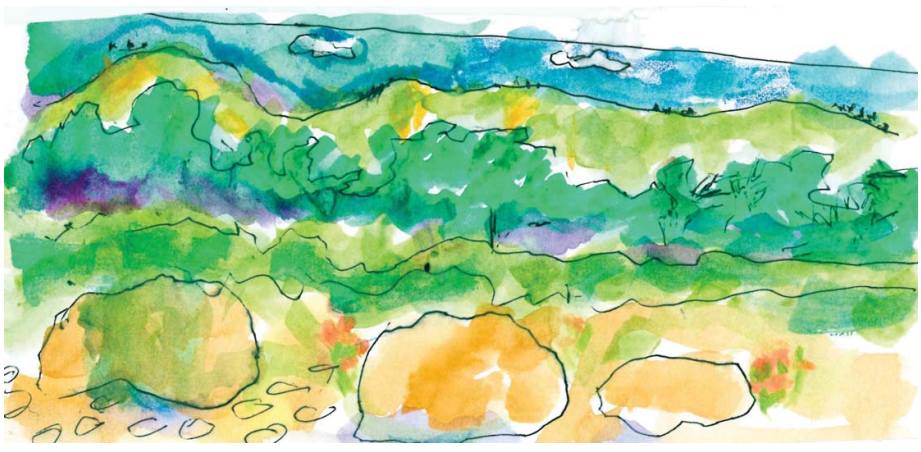
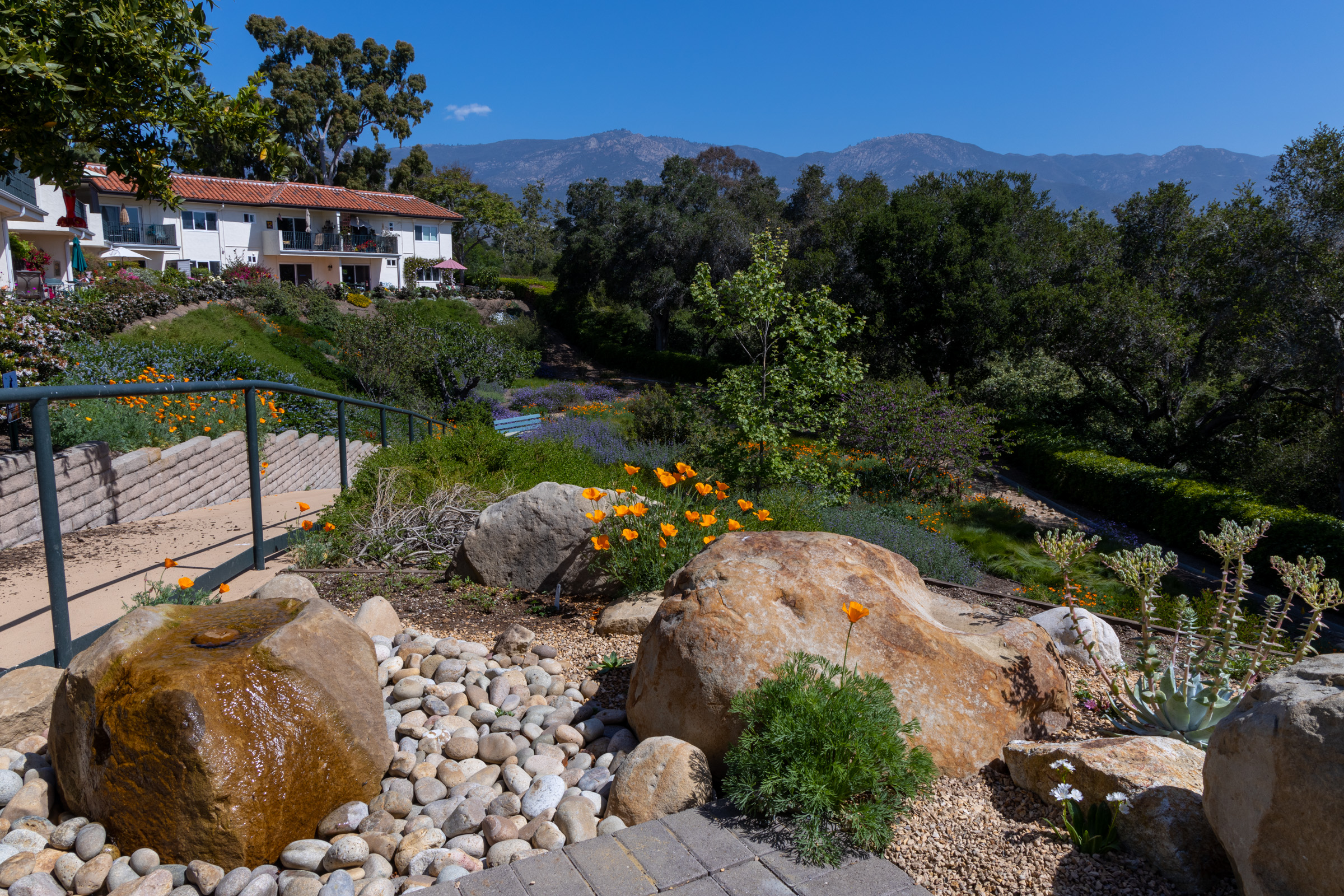
On those days when my mind gets stuck on negative thoughts, I leave my apartment and walk down to the Native Plant Garden. Sitting on the bench, I listen to the soft gurgle of the water flowing out of the top of the sandstone boulder, knowing that in a few minutes birds will arrive for a drink or a bath.

My eyes follow the green slope of plants to the far edge of the garden where a row of dark green California Live Oaks separate us from Mission Creek at the bottom of the hill.

This is your land, our land, and the plants that supported the generations who came before us. Oak acorns ground in stone mortars produced the staple food for the Chumash Indians. I look up to the high mountains to the cliffs of sandstone like the rock in front of me and to the areas of gray-green plants many of which grow in our garden. And then the sky, always the sky, and I am deeply comforted by this enduring landscape.

FOLLOW BLOG BY EMAIL

Enter your email address over on the right to follow this blog and receive notifications of new posts by email.

Summer Monsoon

MONSOON SEASON

A picture containing outdoor, sky, clouds, day

Description automatically generated
Building monsoon clouds

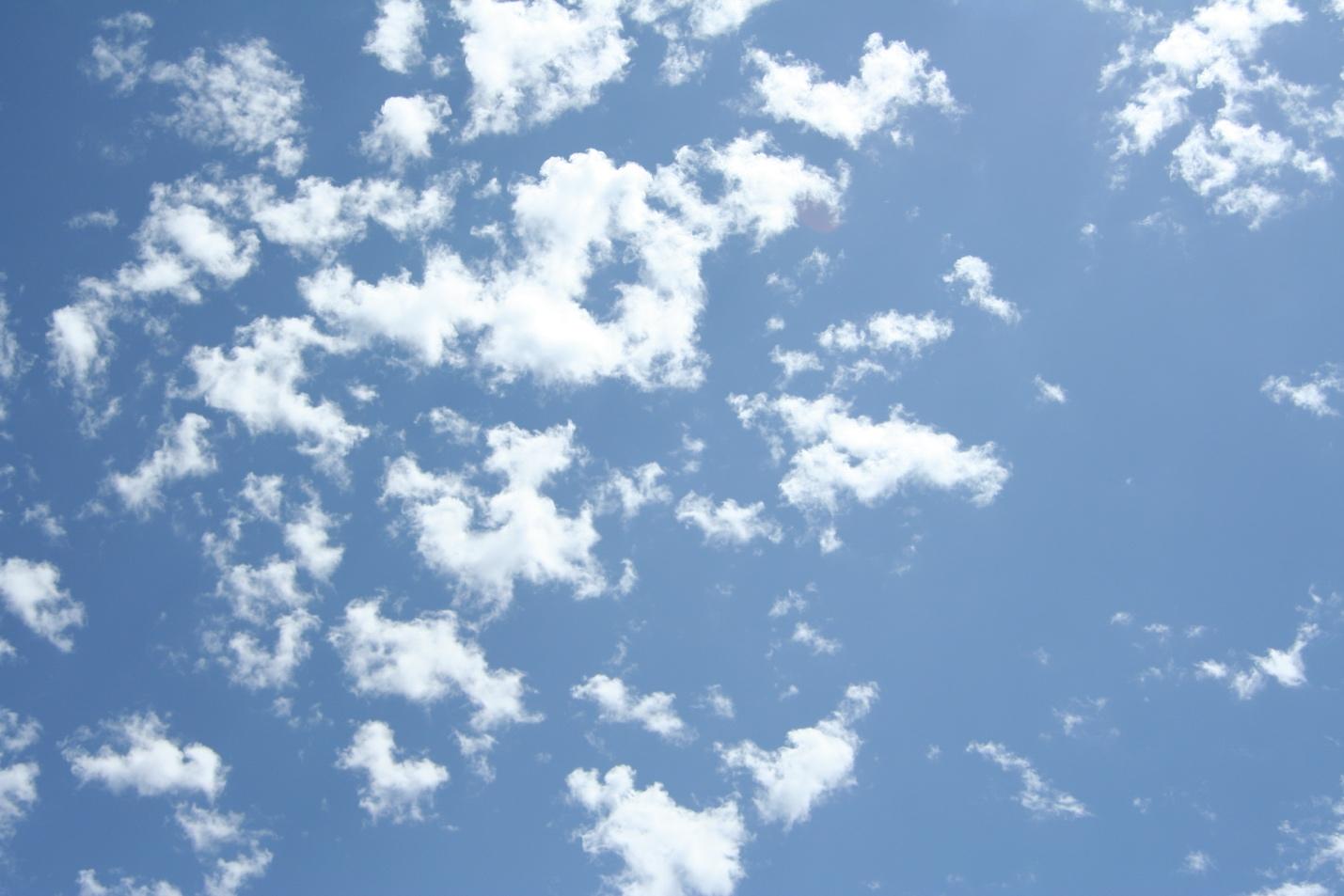
When webmaster George Dumas pushed the button to publish “Summer Doldrums,” I suggested that we take a month off as nothing much was going to happen during the summer months.  Then, on the morning of June 24 I woke to a day that both felt and looked different. Cumulus clouds were heaped up against the backside of the Santa Ynez mountains and flotillas of small white clouds with lacy edges stretched across the sky. Listening to my weather radio, I learned that a monsoon brought violent storms to the Los Angeles basin and the surrounding mountains. 

Monsoon season most often occurs in July and August and brings most of the annual rainfall to the Southwest. We were experiencing the edge of the first one today. 

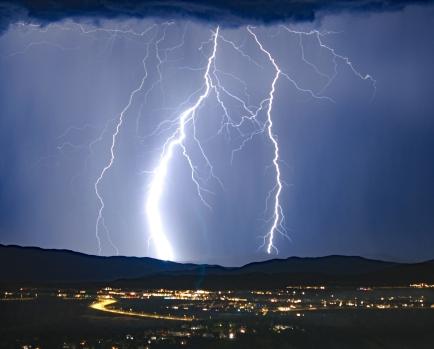
Lightning strikes are seen about 2 a.m. Wednesday, June 22, 2022, over Santa Clarita as a monsoonal storm enters the area. (Photo by Mike Meadows/Contributing Photographer)
Lightning over Los Angeles

Most monsoons occur when the hot summer sun heats up the land and the wind shifts to the south drawing up the moist, unstable air from the Gulf of California or the Gulf of Mexico.

Along with rain came strong wind gusts and even some hail in Los Angeles.  The electrical storms produced an estimated 3,600 lighting strikes, one igniting a brush fire in the Tehachapi and another tragically striking and killing a woman and her two dogs who were taking a morning walk along the San Gabriel riverbed.  Fatal lightning strikes are rare with this being the first one of some 20 occurring each year.  

Asphalt struck by lightning

Only the northern edge of the monsoon reached Santa Barbara.  I spent the day outside with my camera, my eyes always on the sky.  The air was silken, not too humid without any of that sharpness we associate with the typical onshore flow from the ocean. It was the kind of day that makes you feel like a different person.

Blue sky with white clouds

Description automatically generated with medium confidence
Lingering monsoon clouds over Santa Barbara

Now, at almost 4 PM, the show is mostly over.  The heaps of clouds over the highest mountain ridges have withdrawn or simply melted away leaving behind a few cloud fragments. 

Although failing to bring us rain, the monsoonal visit was a delightful change from the usual coastal weather.

 SUMMER SOLSTICE

The rising solstice sun shines behind the ancient entrance of Stonehedge and the rays of the sunlight shine into the center of the monument.

It’s been several weeks since the Summer Solstice, but the days grow shorter so slowly at first that you’re not apt to notice.  Because of the earth’s tilt toward the sun, the sun is directly over the Tropic of Cancer at a latitude of 23.5 degrees north. The Tropic of Cancer passes over Baja California as it circles the globe, or more precisely, over the small seaside town of Todos Santos, an hour’s drive north of Cabo San Lucas where a planted stick casts no shadow.

Because of the slow heating of the land by the sun, the highest temperatures will be several weeks later in mid-July. 

Within the Arctic Circle, at the Summer Solstice, the sun will shine for 24 hours while darkness will prevail at the south pole.

Me and my short shadow at high noon. Samarkand, Santa Barbara (34.006 degrees north)
[Photo by Jodi Turley]

Over the millennia, various cultures have celebrated the Summer Solstice in different ways.   Here in Santa Barbara we have a parade with imaginative handcrafted floats, bands (emphasis on drums ) and costumed dancers moving to the beat.  For me, butterfly wings glowing in the sunlight epitomizes summer. 

FOLLOW BLOG BY EMAIL

Enter your email address over on the right to follow this blog and receive notifications of new posts by email.

Foggy Days

Dear Friends:

June’s entry is an expansion of my monthly column (“Nature’s Note”) in “Sam News,” our in-house publication.

Morning fog out of my window

Space is always limited while my blogs are as long as my loyal webmaster, George Dumas, has the time and patience for converting my words into the WordPress format.  It’s no secret that I am no fan of fog.  But now with my declining eyesight, my world is enveloped in a perpetual haze and on foggy mornings we’re all in it together.

It’s only on the clear days that I know how much I’m missing.  But at 93, I am every day grateful for a good mind and the ability to express and feel gratitude for what I still have. 

It is through song and call note that I now recognize most birds.  And I’m helped along by general body shape, where and how they are feeding and whether they prefer the ground or trees.

Even without my disability, it behooves me even if I don’t love fog, to at least learn to appreciate it by understanding how fog is formed and its likely behavior.

FOGGY DAYS

Today is June 1st.  We are halfway between the two foggiest months of the year which locals call May Gray and June Gloom.  When the prevailing northwest winds pass over the even colder ocean, the air condenses into tiny droplets producing the fog. 

But it’s not as simple as that.  In the northern hemisphere, the earth rotates counterclockwise (the opposite in the southern hemisphere).  Because of this rotation, wind blowing from the northwest (our prevailing summer wind) curves to the right.  As the wind curves to the right, it sweeps off the top layer of water causing the upwelling of the deep, colder water.  When the relatively warmer wind passes over the cold, upwelled water, fog is formed.

Upwelling of deep ocean water

This rotation, called the Coriolis Effect, has a profound effect on tides, bodies of air and even the behavior of storms.  It causes our rainstorms moving in from the Pacific to rotate counterclockwise, so that the winds of an approaching storm, blow from the south. 

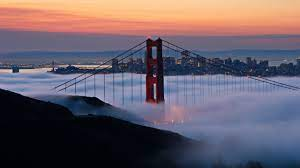
Depending on the topography, fog can put on a dramatic show. In the Bay Area, fog building up like waves over the Sausalito Hills spills over the lee slopes.  Unimpeded, fog moves like a river through the Golden Gates, the only complete break in the coastal hills.  To the north and south the fog seeks out gaps in the hills as it moves inland.

Fog pouring through the golden gate

When the fog enters the Bay through the Golden Gate part of of it aims for the Berkeley Hills.  The rest turns left drawn irresistibly toward the heat and low pressure over the Delta and the Sacramento Valley. The fog is often accompanied by strong cold winds that are notorious in summer afternoons rushing through the canyons of tall buildings in San Francisco.

Fog moving into Santa Barbara at sunset

And there were those mornings in Berkeley when the fog stayed low and my hill rose above it like an island in a gray sea. 

The fog varies in its extent. It can spread far out to sea.  It can be a narrow ruffle covering just the beach or it can be drawn far inland by the warmer temperatures. It may flow at night into coastal valleys, and in foggier periods it will surmount coastal ranges, visiting even inland valleys.

Most days the fog will retreat offshore by midday, but other times the marine layer persists for days on end seriously depressing the spirits. 

Fog drip

Meteorologists call this cloud type status.  It’s usually made up of rather smooth layers of clouds that can sometimes meet the ground.  The fog can either be “dry” or it can produce drizzle especially under trees, enough to register in a rain gauge. We need any moisture in this semi-arid climate of ours where longer periods of drought are a part of climate change.

Even though I seem to thrive on those days which begin with sun, I am now gratified, while still in bed on a windless dawn to hear the drip, drip of condensed fog falling off leaves and needles.

FOLLOW BLOG VIA EMAIL

Enter your email address over on the right to follow this blog and receive notifications of new posts by email.

Tom’s Birds

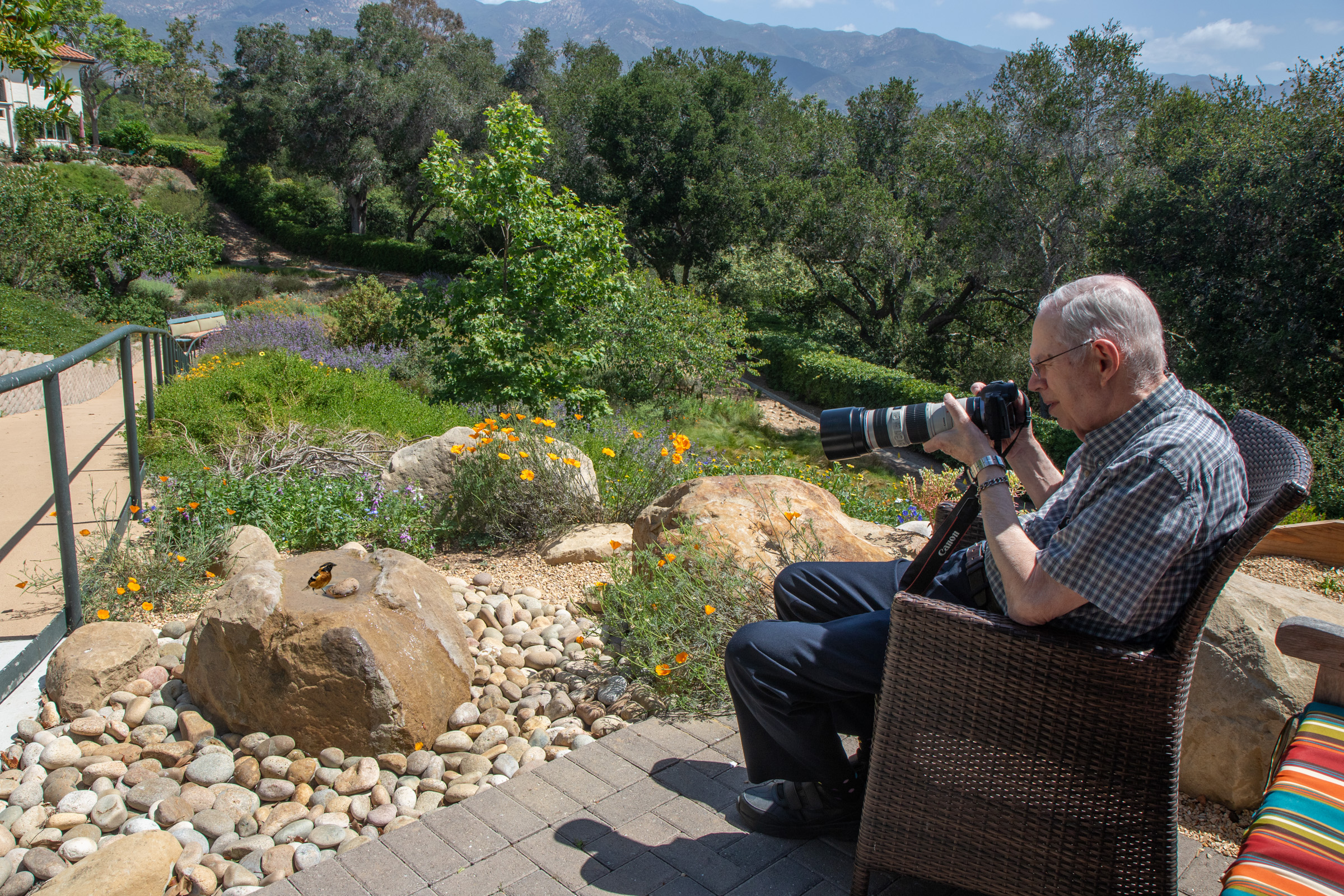
Tom Ginn and his wife Sherry moved into Samarkand in July 2011 from Los Gatos, a leafy residential community south of San Francisco. Before retiring Tom had worked as a software engineer. He was already a serious amateur photographer using a top-of-the-line Canon.

Along with recording the life of the family, including a son and daughter, he was also adding landscapes to his collection. “I haven’t shot a roll of film since 2003; digital photography and the computer give me so much more versatility,” he says.

But those who know Tom appreciate his outstanding patience as he waits for just the right shot to produce a memorable portrait of an elusive insect, a butterfly with its erratic flight or a shy bird as it comes to the bird bath.

The first bird photos were taken over several months at the bird baths behind Ann and Bob Allen’s duplex, located over the fence at the southernmost end of the EastView apartments. The duplex, Oakcrest, has the ideal birding location, sheltered by oaks up the steep slope of Oak Park.

The birds are drawn to the area by Mission Creek and its forest of sycamores and Coast Live Oaks. Ann has arranged a welcoming collection of shallow pot bottoms filled with water, surrounded by mostly potted native plants. When it’s hard to find a good variety of birds elsewhere at the Samarkand, you can count on being rewarded at Ann’s bird baths.

When a large sandstone boulder (over the fence at the top of the Native Plant Garden) became a bubbling bird bath, the birds had a second choice for their drinks and baths. The first group of photos is in Ann’s garden, and the second larger group is at the “Bubbling Fountain.”

The birds are identified by species accompanied by a few comments. Some of the photographs have been made into greeting cards and can be purchased at the Samarkand gift shop.

ANN’S BIRDBATHS

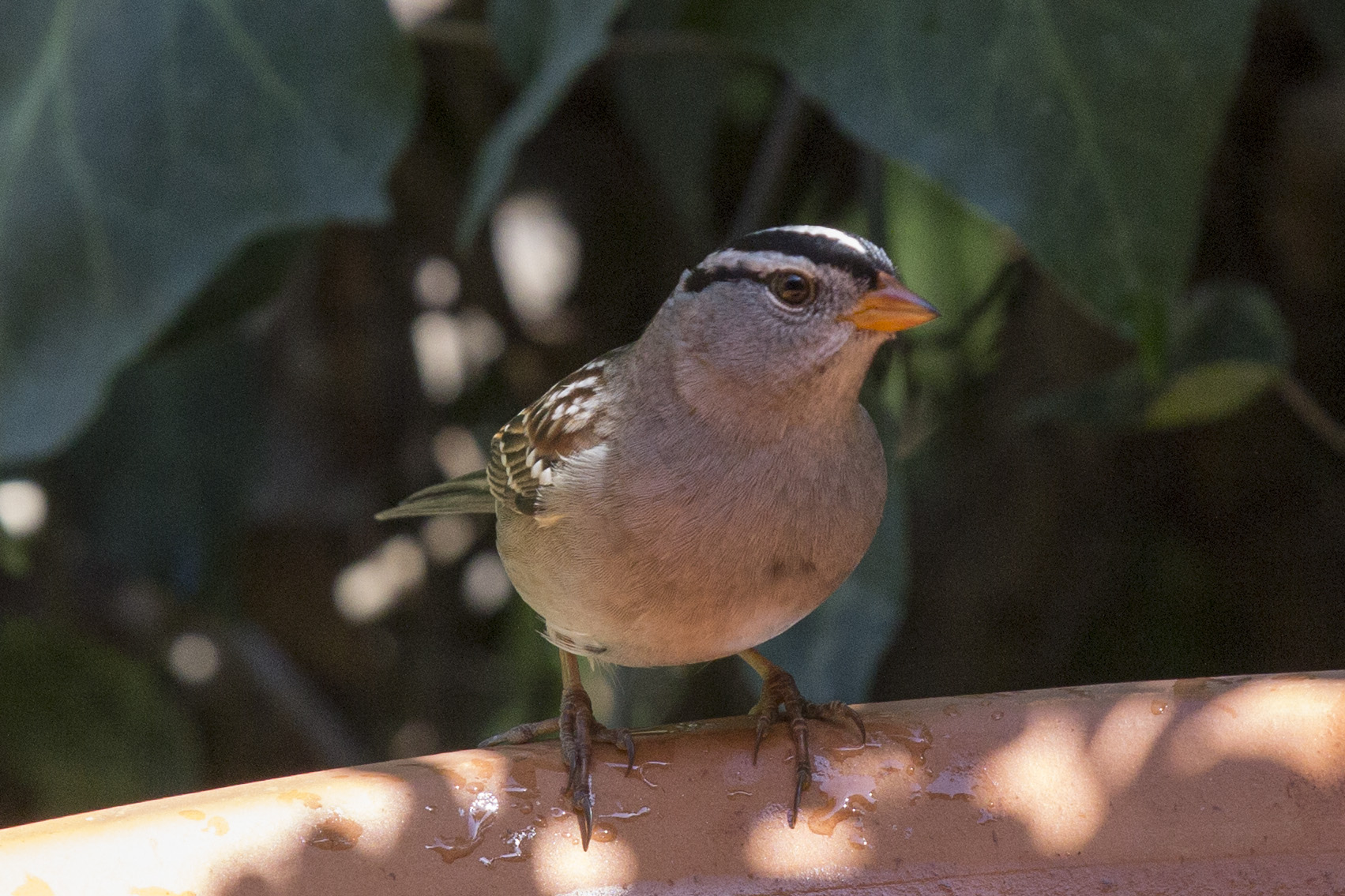
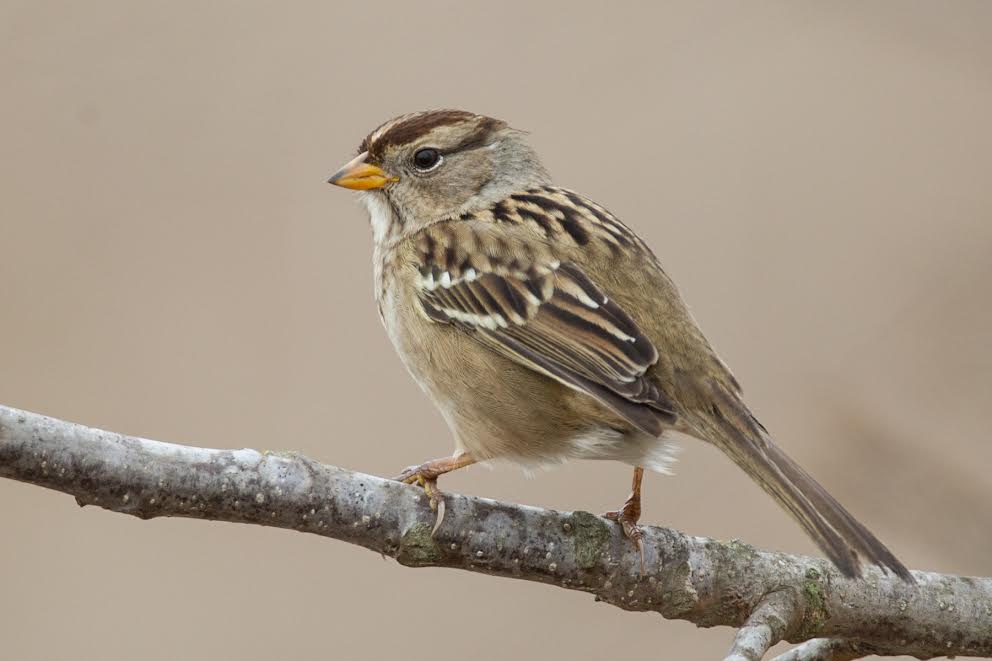
(1) White-crowned Sparrow. A group of these sparrows spend the winter in the Native Plant Garden often singing.

(2) Immature White-rowned Sparrow. In April the group flies to Northern Alaska where they nest in the dwarf willows before returning to our garden in October.

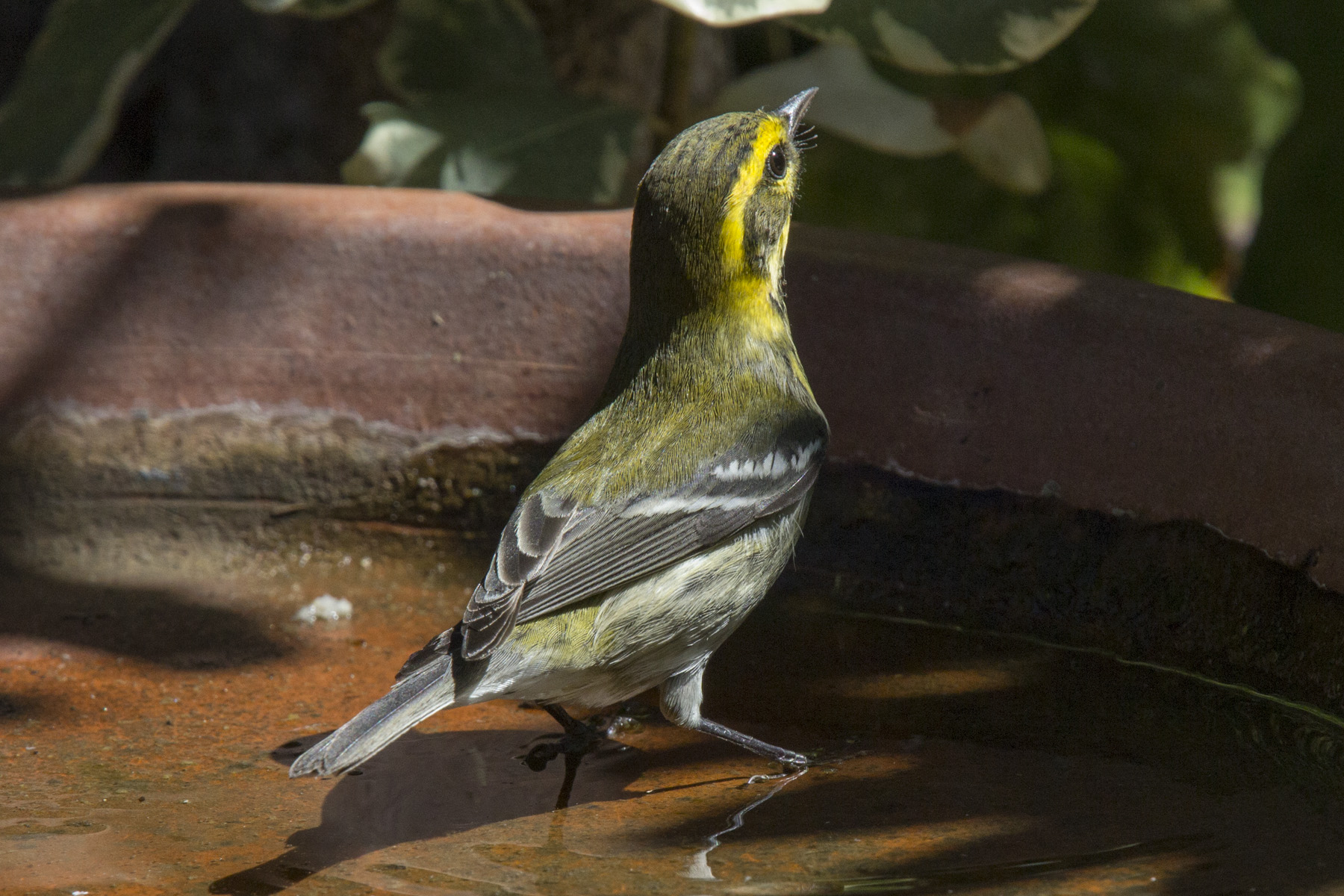
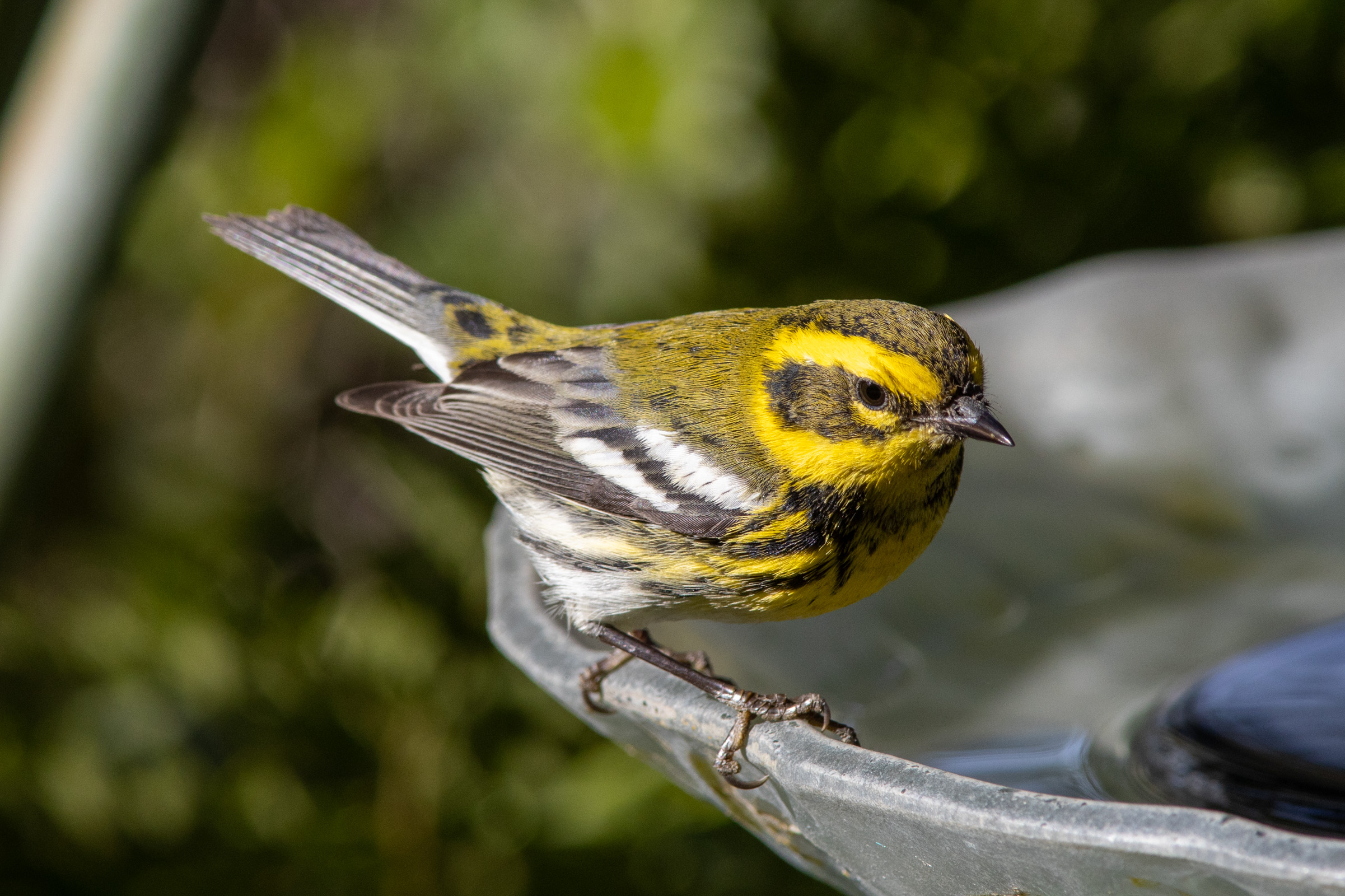
(3)(4) Townsend’ s Warbler. Another winter bird with especially bright plumage.

(5) Orange-crowned Warbler. Year-round bird.

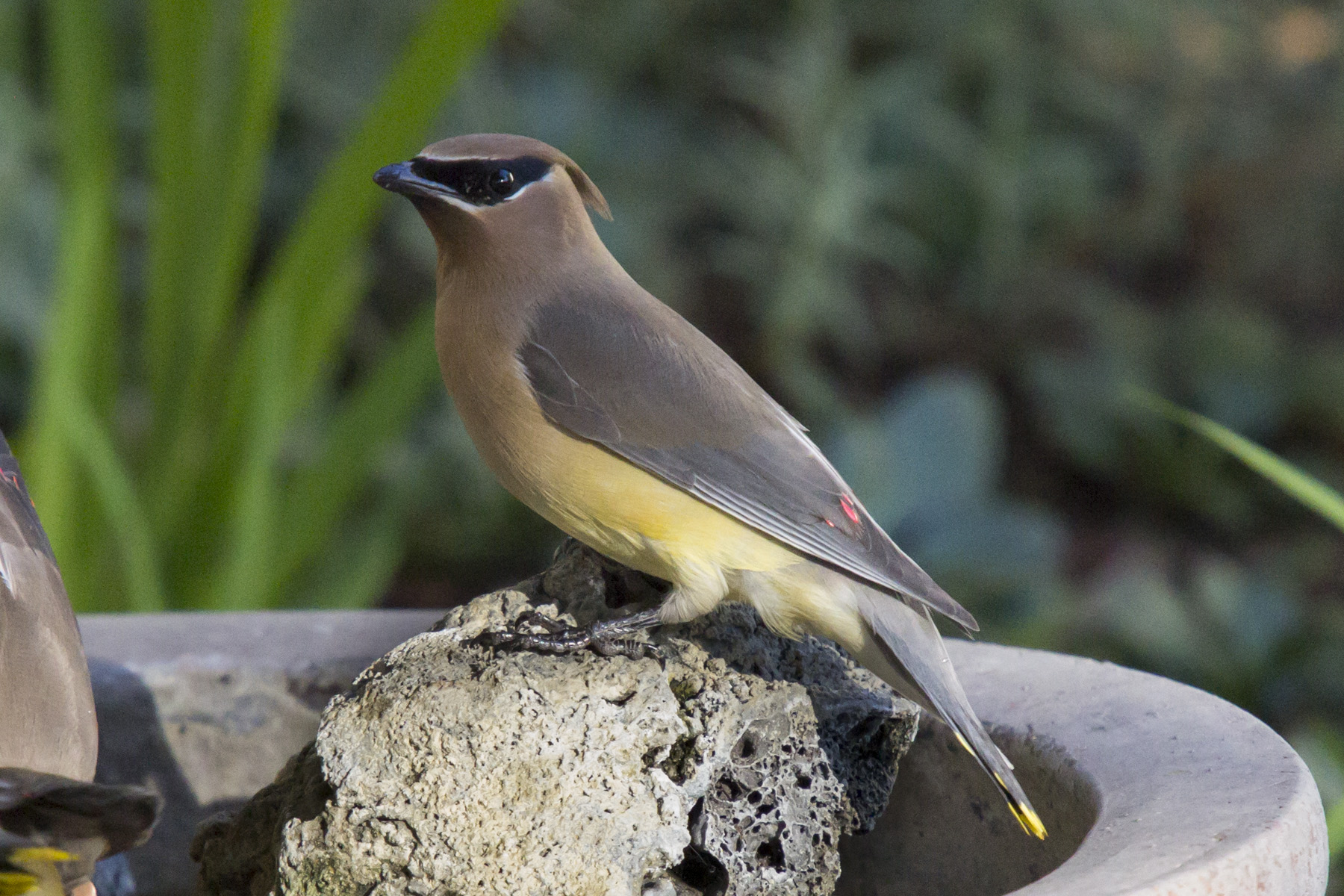
(6) Cedar Waxwing. This lovely bird is a nomad traveling in flocks from place to place in search of berries. They are sometimes in the company of Robins.

(7) Group of Cedar Waxwings. In the spring they will head north to conifer forests where they will briefly breed before heading back on the road again.

(8) Nashville Warbler. An uncommon visitor.

(9) Ruby-crowned Kinglet. A small, energetic bird who reveals his bright crown when agitated. He is another of our winter residents

(10) California Towhee. A big sparrow who is a year-round resident.

(11) Yellow-rumped Warbler. Developing its breeding plumage before heading north.

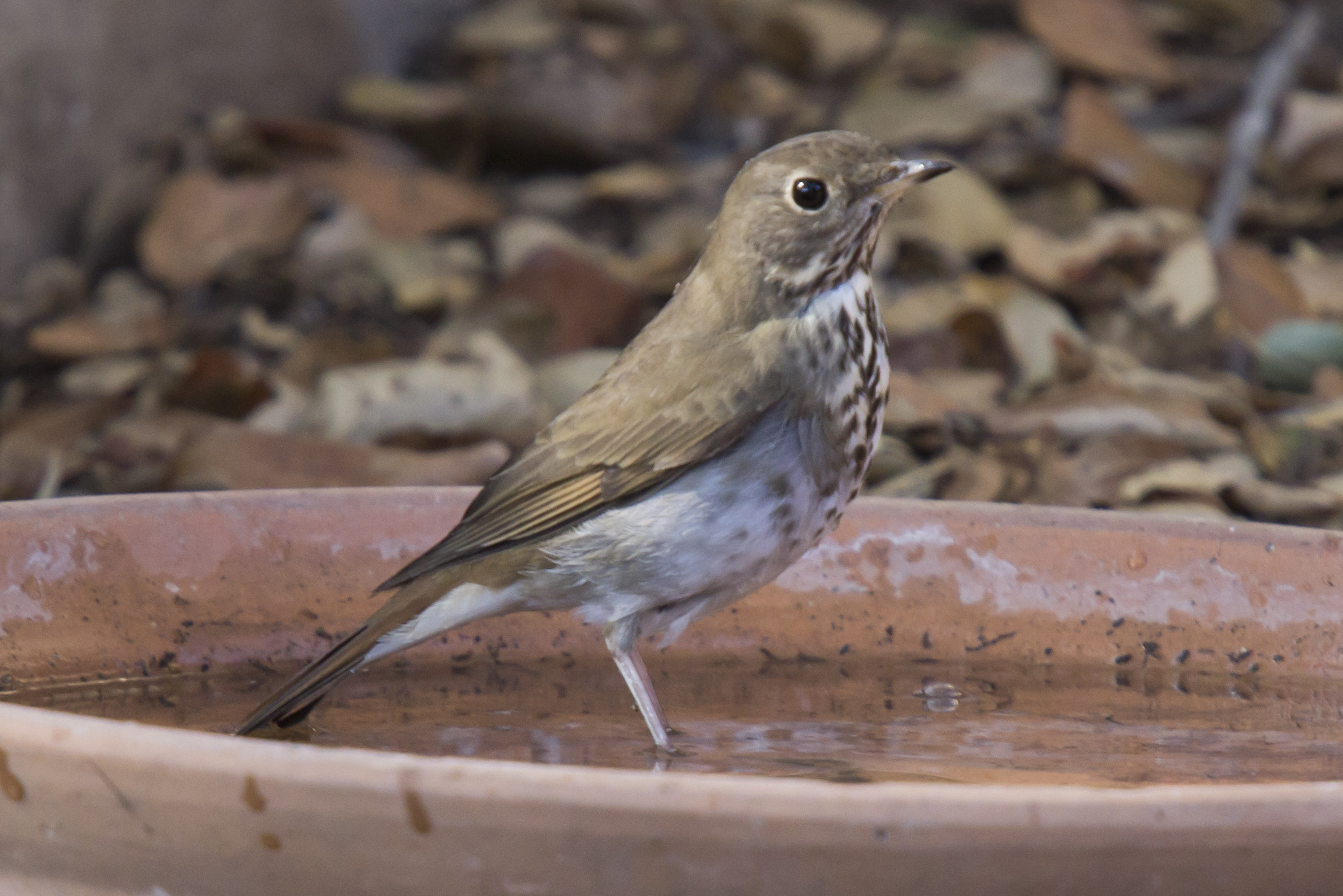
(12) Hermit Thrush Another winter resident who heads for the Sierra in the spring to sing its glorious song.

The sandstone fountain, we call “Bubbling Rock” in the foreground overlooks the Native Plant Garden.

(1) The Anna’s Hummingbird is a year-round resident and the largest of our local species.

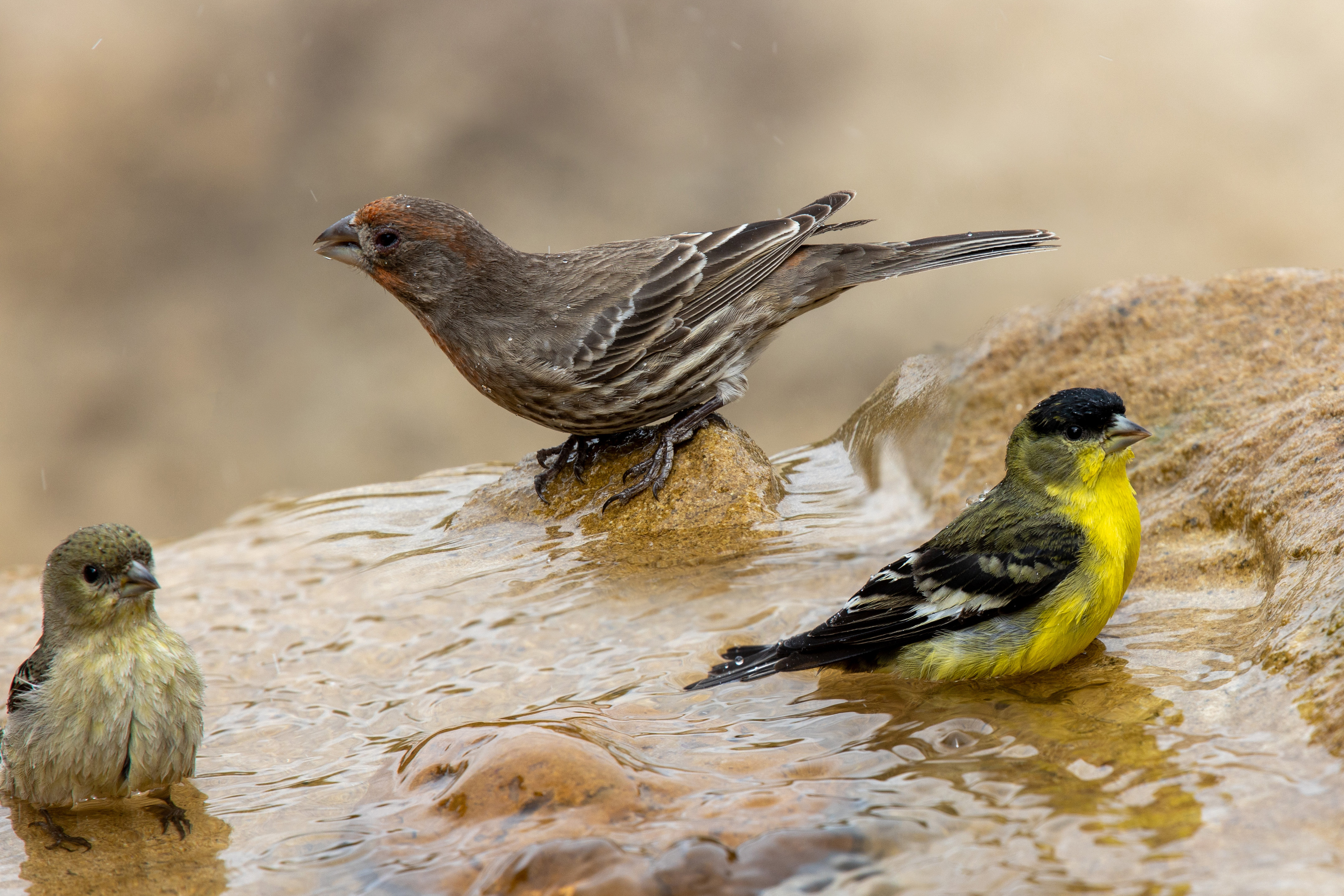
(2) & (3) Adult, female, and immature Lesser Goldfinches.

(4) Orange-crowned Warbler.  Several breeding pairs sing almost continuously above Oak Park at Samarkand in the spring.

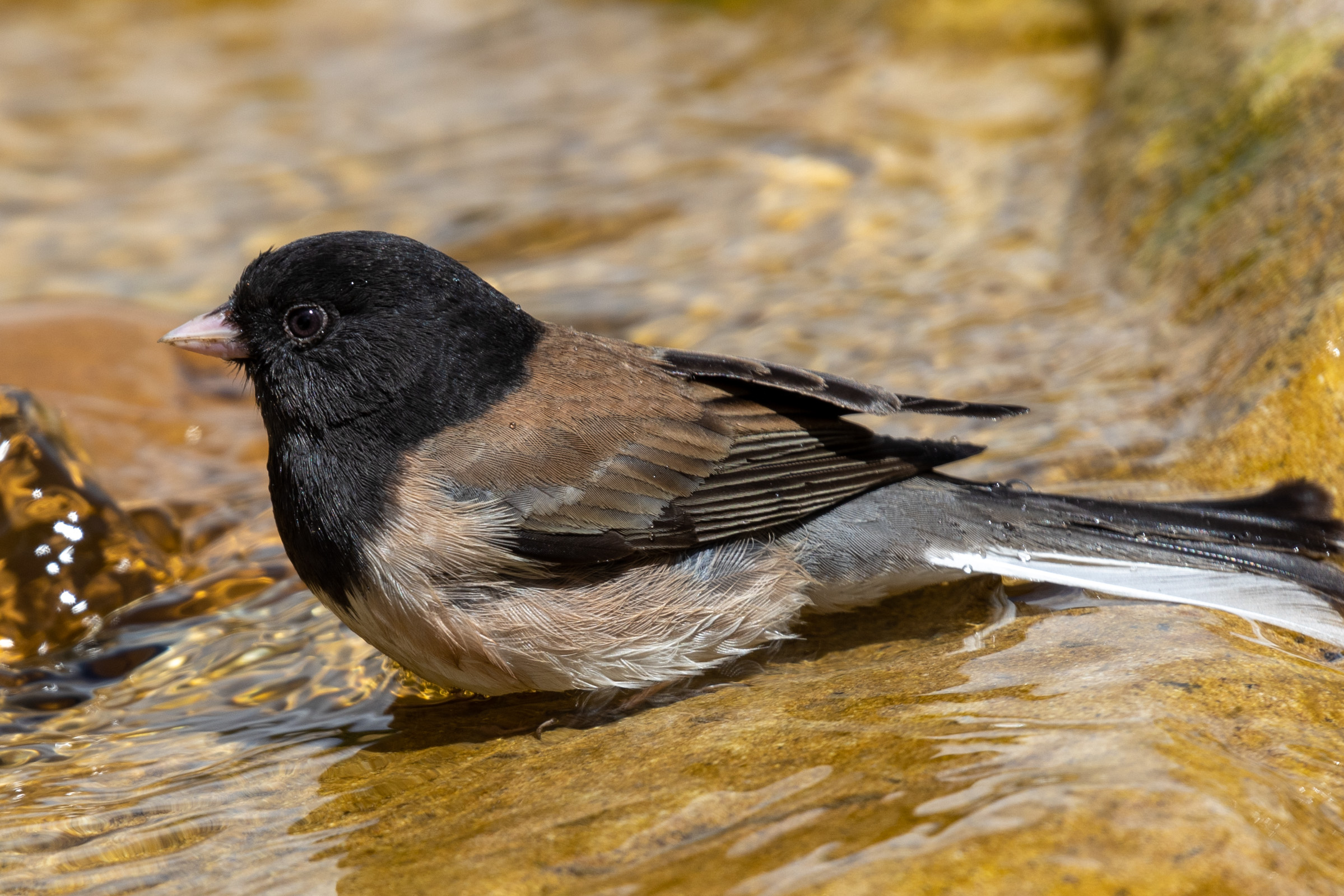
(5) Male Dark-eyed Junco.  Juncos, who nest on or near the ground, are one of our most abundant species.  

(6) Male House finch(L) and Pine Siskin appear to be comparing stripes.

(7) Like the crows, jays are members of the Covid family with similar aggressive ways.

(8) A wet Orange-crowned Warbler revealing its orange crown feathers.

(9) A titmouse will occasionally build a nest in a bird box.

(10) Male Lesser Goldfinch, one of the most abundant year-round birds.

(11) Probably an Allen’s Hummingbird or possibly a migrating Rufous Hummingbird.

(12) Four Nutmeg Mannikins.  They are escaped cage birds which have successfully naturalized.

(13) Tom Ginn photographing at “Bubbling Rock”

Tom’s Camera:
Canon EOS R with a 70-200mm f4 lens and 1.4x extender

Where I Live

(Excerpts from my book The Best for Last)

Early November
The resident hawk
Repeats its urgent calls.
Where is the rain?
The temperature is above eighty.
Night falls with red skies
Color caught by the high cirrus clouds
Too thin for rain.

With darkness comes
The cricket stridulations,
The final notes of the fading season

After midnight I step out on my porch,
Looking high to the south.
Orion waits, trailed by Sirius,
The hunter’s faithful dog.

Venus will soon separate itself from the rising sun
And before month’s end will shine alone
In the eastern sky.

Once I’d imagined spending my final years
In the town where I was born
In a tiny house of my own design
One room only
With alcoves for bathing, sleeping, fixing tea
A steep roof with a skylight or two
A generous porch under a sheltering eave
High in the Berkeley Hills,

But instead, my final years
Will be spent in Santa Barbara
in a spacious apartment
One of many apartments
For elders like myself,
Close to family,
a hedge against loneliness.

The geographer in me
Wants to tell you
That Santa Barbara is located
At the southern end of central California.
Maybe 50 miles below Pt Conception
Where the coast bends inland
Thanks to the San Andreas Fault
Flexing its muscles.
So now the coastal mountains run
From east to west,
and most confusing of all
You look south if you want to see the ocean.

For me, the ocean has always been to the west,
And the direction of the setting sun
Where if you sail far enough
You’ll bump into China.

The high Santa Ynez Mountains to the North
shield the town from certain cold draughts.
But in downpours, the mountains
Shed all manner of debris
From silt to sandstone boulders
As big as cars.

Now as an amateur geologist,
I’ll tell you that this knoll
I call home, is surrounded
By flatter land referred to
As an alluvial fan,
Crossed by creeks that
Only show up when it rains.

Locals brag about the mild climate
Forgetting about those vehement moments
Of gale-force winds
Called sundowners.
Or what about the microbursts
Which have been known to knock a plane
Out of the sky?

And there’s nothing mild about my landscape.
Never still — it twists, heaves and cracks.
Worse, it is said that all the commotion
Is bringing Los Angeles ever closer.

Once we were covered by a warm sea
With dinosaurs wandering the shallows.
Later mountains rose up,
Full of seashells.

Now it seems that our future is drought.

I look out the east-facing windows
Down into Oak Park with its
Pale limbed-sycamores and faded foliage.

It’s a peoples’ park
With mariachis on the weekend
Shouting children,
Birthdays with piñatas
Quinceaneras, sometimes a funeral

Look up to the first ridge
To St. Anthony’s towers
And to the two rosy domes
Of the old mission.

Higher yet is the bulk
Of the Santa Ynez mountains
and the conical shape
Of my mountain – Montecito Peak
See how the angled sun
Deepens the canyons.

Slide your eyes sideways
To where the mountains
Slip into the blue line of the sea.

Now face south
Over our native garden
Bordered oaks from the park
To the silent creek bed.
I look for hummingbirds, bush rabbits
and worry about coyotes

The east hills, called the Mesa
Holds off the fog
Until after dark,
when the hills are breached.

Oh yes, my garden off the front door
The narrow porch of a garden,
Hung with red geraniums
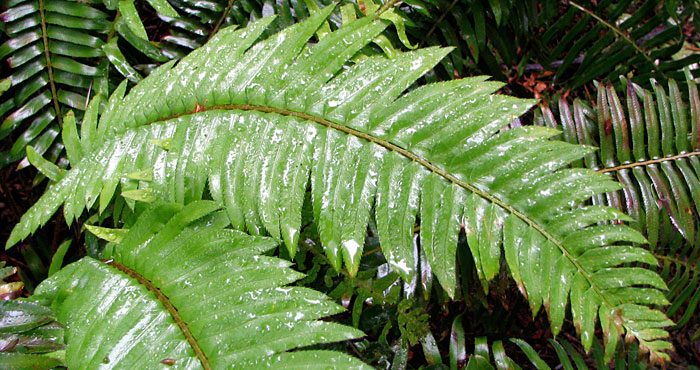
And softened by pots of ferns

I lie in my bed beneath the windows
Hoping for wind to move the chimes.
I lift my head at dawn.
Do I see the silhouette of the mountains
Against the lightening sky?

Or are we cocooned in the fog
That drips from trees
Almost as welcome as rain.

And what is the first bird this morning?
The clink of the towhee
The querulous wren
The sweet ring of sparrows’ song?

Now you are hearing the voice of the birder
Leaning on every song
In the absence of good eyesight.

Acorn woodpecker, flicker
With strong beak and loud call,
Or the relentless caw of the black crow,
Boss of the neighborhood?

Will I be lucky enough
To have an owl’s hoot rouse me
In the early morning hour?

I feather my nest
With a down comforter
Books,
Bouquets of pungent sage,
Baskets of lichen.

How do I finish this short tale?
A day ending, I suppose.
With the dark coming on by five
A tale of rain arriving?

A gusty wind from the southeast
Testing itself.

In the early morning hours
Between midnight and dawn
The rain falls
I smell it first
And then sweet fragrance of hope

Could this be
The beginning of a season
Of abundant rains
Enough to end the drought?

This slideshow requires JavaScript.

COMING IN THE SPRING: The Best for Last: The Nature of Santa Barbara by Phila Rogers.  Includes the blogs and a number of short pieces.