 After having lived most of my life in the Bay Area, California mountains meant only the Sierra Nevada. My earliest memories are of Lake Tahoe with the bands of blue, the color deepening the further you were from shore. I remember the translucency of the water, the whiteness of the beach sand and the way the sun shining through the water left a dazzling pattern on the sandy bottom. And the granite, always angular and glistening with feldspar.
Vacation in the mountains was a reprieve from home and the rank eucalyptus odors. Now it was sage and pine, and brilliant, hard edged cumulus instead of the dull sheets of stratus.
But it was time to put all that behind and turn my thoughts without aversion to the Southern California Mountains, another transverse mountain range like the Santa Ynez range. The deep power of the San Andreas fault had twisted the mountains sideways, contrary to the northwest trending of the other California ranges.
With some of the family now living in Southern California, a three and a half hour drive to Big Bear Lake in the San Bernardinos won the day over nine hours north to Lake Tahoe.
 The San Bernardino Mountains rise abruptly on all sides out of its arid landscape. The curving road makes a quick ascent passing occasional coulter and knobcone pines, dried stalks of yuccas and chaparral. In a land of few lakes, only dams can create a body of water, gathered mostly from snow melt. Big Bear Lake, no exception, occupies its own shallow valley set in low mountains and open conifer forests. Unlike the Sierra, where millions of trees have succumbed to the long drought and insect attacks, Big Bear’s trees look healthy, perhaps being accustomed to dry years.
While noticing the distinct differences between the appearance of Sierra Nevada and the San Bernardinos, I remembered reading of their similarities. Both began as batholiths formed of cooling magma deep underground before being uplifted some three million years ago. Older rocks overlain the newer granites. But in the Sierra Nevada, the old rock eroded away with the heavier rains and the extensive glaciation. In the Santa Bernardinos, with glaciation only on the highest peaks and less rain, more of the old rock remains.
 Because we were nine people, we rented a large, recently remodeled house which is currently on the market for three and a half million dollars. While the family took to kayaks and paddle boards, I settled in on the deck to figure out this place.
The dominate pine is the Jeffrey – a close relative of the ponderosa (yellow) pine, which along with the coulter pine, are all members of the yellow pine family distinguished by packets of three long needles which produce nice harmonies in the wind.
The fir family was represented by white fir growing, at the deck rail, with short, dense needles which point upward. Each species seems to have its own distinct odor. Press your nose into the cracks between the plates of bark on the yellow pine and you smell vanilla. Sniff the white fir and you get an essence of pine and citrus. Be like the native American Indians, brew a cup of tea with the needles and you have your daily requirement for vitamin C.
 But what took my fancy was the pair of sugar pines above a neighbor’s roof. Aside from being both the largest and second tallest in the pinus family with uncommonly long pine cones, I love this pine. John Muir savored the exuded gum which he said was sweeter than maple-syrup. The branches are arranged on the straight trunk often symmetrically, but sometimes a branch will shun order and stretch out further than the rest. Cones hang near the tip of the branch. I remember watching them in a winter wind swaying as if they were extravagant ornaments. Once, while examining a cone a foot and a half long lying on the ground, I remember someone telling me that the scales expand and contract with the change of temperature and the prickles make a grove in the soil for the seed. I’ve never been able to find another citation for that charming “fact” since.
The forest, at least in the neighborhood of our house on north-facing shore is knitted together by an understory of a tall manzanita called Pringle Manzanita. The season for its pink urn-shaped flowers is long past and only a few dried berries remain.
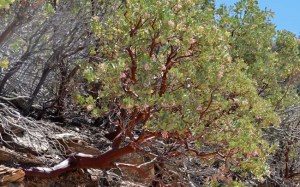 Time to shake off the lethargy that comes with an occasional fleecy cloud drifting across the blue and then dissolving or the soft song of pines, and explore the rest of the lake. The dam is a modest one required only to hold back the snow melt and the marshy waters in the shallow basin. Once around the corner to the drier south-facing shore, sages and the sturdy Sierra juniper make an appearance.
At the visitor’s center, we take literature on the trees of the region and the description of a champion lodgepole pine further up the mountain which sounds almost reachable by a short trail.
It appears there would be no avoiding the walk once my daughter learned of it. Children, no matter how old themselves, are reluctant to entertain the ills (real or imagined) of their elders. I did bring my boots so maybe I can avoid a compound fracture when I turn my ankle on the inevitable loose rock.
 Once we turned off the road that circles the lake, we were in the forest headed uphill. We pitched and heaved over the bumpy road. But once in this sub-alpine forest we felt like we were back in the forests above Lake Tahoe. Though I am considered the chief exclaimer in the family, we all exclaimed over this familiar beauty. No more yellowish rock. Here the granitic core of the mountain revealed itself. The understory became varied – sometimes tender green fields of bracken ferns, other times corn lilies.
 We parked at the end of the road where a sign pointed downhill to the lodgepole pine and to the Bluff Lake Preserve. I recognized this kind of trail – decomposed granite made “interesting” by rocks and exposed roots. My grandson Stuart walked close behind me and my daughter ahead of me. I focused on what was underfoot allowing only sidelong glances at the creek next to the trail over hung with
 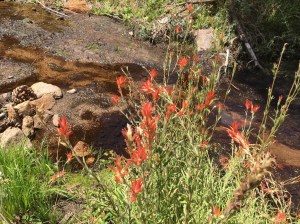 wildflowers, the first such sight in these mountains. The trail leveled out as we approached the lodgepole pine grove. Lodgepole pines are uncommon in this southern forest. They hark back to a cooler era. My joy was somewhat tempered by remembering that I had to walk back out. I didn’t care. I hadn’t expected this gift in my 89th year.
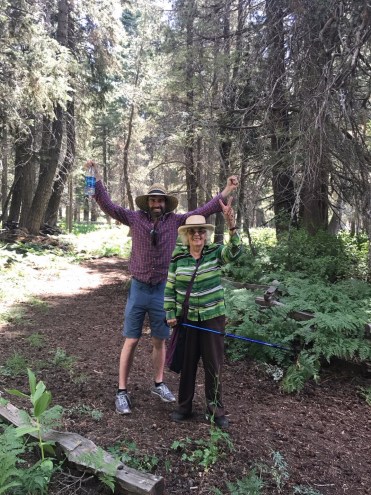
The old giant was closely encircled by younger trees (as I am by my family). The tree overlooks a broad green meadow—a meadow which not so long ago had been a pond. In the Sierra, the Lodgepole pine is the first to show up as the pond becomes a meadow. As other trees move in, the meadow becomes part of the forest.
 The noble tree is a part of a national registry of the largest known of its species in a particular geographic area. A nearby Jeffrey pine is several hundred years old, an “old growth” survivor in a forest that had been heavily logged


The champion lodgepole pine from its meadow and two oldtimers.




 The final ascent on stone steps to the base of the falls looked damp, making them especially perilous for my old legs. A bench at their base invited me to sit a while, let my granddaughter

 Three weeks later with Berkeley birding friends, Bob Lewis and his wife, Hanno, we returned to Nojoqui Falls park to find the Purple Martins. Bob is sitting on the left. The heap on the right is actually me lying on my side watching martins in flight. Stretched out, has become my preferred position for watching birds of the sky and for general cloud-spotting.(I highly recommend to others who love clouds “The Cloudspotter’s Guide by Gavin Pretor-Pinney – the founder of The Cloud Appreciation Society)

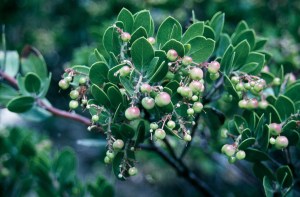 If you have lived a natural life say as a manzanita bush on the slope of the San Ynez Mountains you will understand the true meaning of summer. You will have grown new foliage or lengthened the leaves you have during late winter or early spring. You will have flowered and welcomed the bees. Now the flowers have turned into fruit, it’s time to let them ripen in the warm sun of the long days. It’s a season for repose or maybe deepening, as your tap root reaches down further to find water.
 The valley was part of a 6,658 acre Mexican land grant known as Canada Larga 0 Verde. Turning off highway 33 (one road to Ojai) onto Canada Larga Road you see your first bit of early California history – a 7-foor-high remnant of a rubble wall which was part of the aqueduct that once carried water seven miles from the Ventura River down to the the mission San Buenaventura where it satisfied the needs of the 350 inhabitants for their gardens and pastures. The waterworks were built by the Chumash Indians under the instruction from the padres sometime between 1785 and the early 1800s. What’s left of the ruins is protected behind a chain link fence.
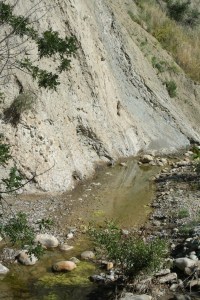 Not much remains of the nearby Canada Larga Creek in late spring but a sluggish flow full of clots and streamers of algae. By the bridge, the creek runs beneath a steep slope of near white rock.


 My eyes were on the yellow mustard growing along the fence where last year I had seen a dazzling Lazuli Bunting amongst the yellow flowers. Plenty of mustard this spring but no bunting. Further up the road everyone (but me) saw a smallish bird sitting on a rusty water tank. The bird turned out to be a blue grosbeak – one of the target birds of the trip. And best yet, it appeared to have food in its mouth. With young to raise, the pair should be around for a while.
 Was it the contours and shapes of the hills, the close and distant views, the colors and always the possibility of an eagle?. You’re not going to be slammed by the brilliance of spring wildflowers. The muted tones of late spring reach a deeper place. Russets, pale beige grass, drifts of mustard reach up into gray chaparral with lavender undertones. A gifted Landscape Architect couldn’t do it as well.
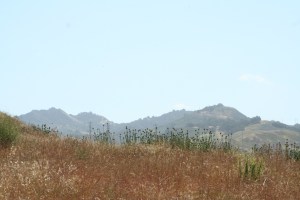 But I could only think about how nice it would be to set up my cot and roll out my bed roll under the edge of one of the oaks in the Canada Larga valley on a gentle slope with a view in all directions – perfect for night coming on with the changing colors. I could imagine crickets chirping in the dry grass and a small owl hooting nearby. Once darkness was complete I would observe stars undimmed by city lights and listen to a night wind rustling the oak leaves, bringing me far off scents.




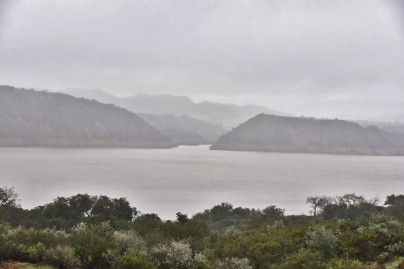


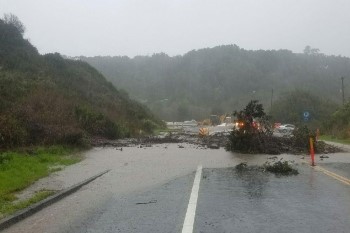


 Take this week – in the middle of October. All day the clouds continued to build up against the mountains. And at bedtime, I heard an unfamiliar sound. Opening the door, I was surprised by rain. Pulling open the window next to my bed, I fell asleep to the comforting sound of rain falling, while breathing in that indescribable fragrance of earth refreshed. The morning that followed was the freshest we’ve had in this endless season of harsh drought.
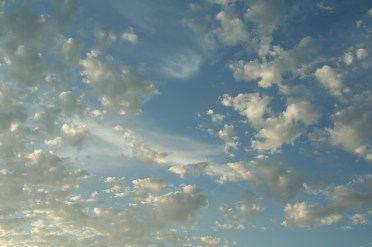 By Wednesday, the temperature rose to 95 degrees, the humidity descended into the single digits, the red fire danger flags were posted. By the weekend the scene changed again. I could joyfully proclaim fall as it should be – a sky full of clouds of every shape in shades of gray and white. I’ve cracked open the door so I can feel the cool breeze and hear the birds as I work on my computer.

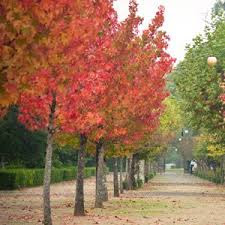

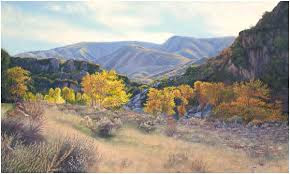
 Yesterday, at the end of the month, the clouds thickened during the day. In the afternoon, a few large drops fell. The air felt dense and heavy, maybe rich in negative ions which some say lifts the spirits.
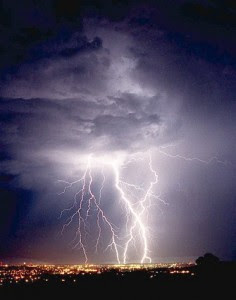 Around 3 am, we awoke to a long roll of thunder. For the next hour, lightning and thunder alternated, until the lightning seemed to rip open the heavy undersides of the clouds releasing a torrent which in a few minutes left behind a half inch of rain. At the end of the day, the clouds had retreated back to the mountains.



 canyon, but it’s when the sun is low in the sky before sunset that the mountains reveal their contours. Purple shadows fill the canyons while ridges and peaks glow in the late light. I learned by studying a map that the deep shadow in the saddle west of Montecito Peak is the top of Cold Spring Canyon.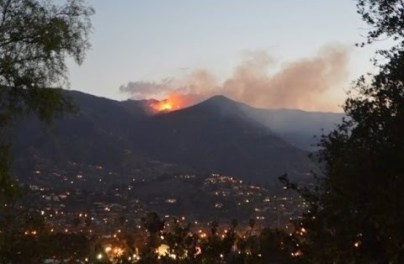
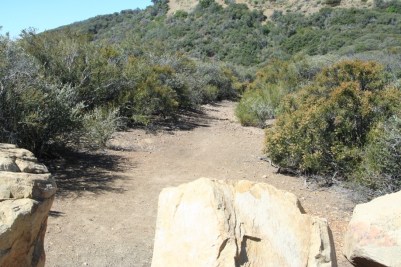
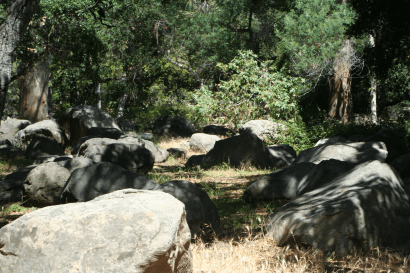
 and three large boulders across the dirt road. The trail – the dirt road – continues just beyond the level section when it becomes a narrow trail dropping steeply down to where Mission Creek begins. The Falls are a popular destination for hikers, most hiking up from Tunnel Trail off Tunnel Road. I’ve never hiked up far enough to reach the falls so I have to rely on the reports of others and the photos they took.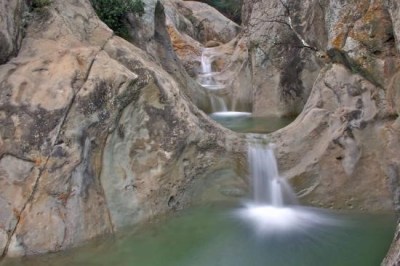



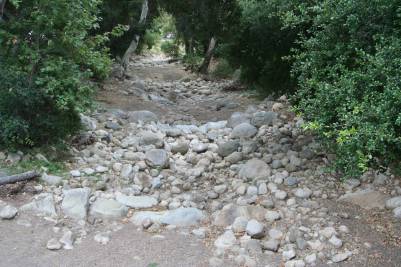
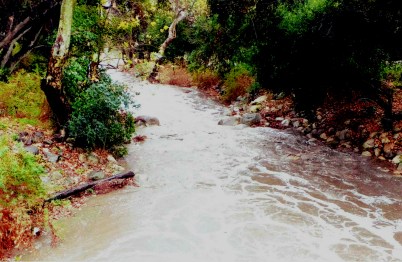 arden, is often reduced to a few algae-filled pools.


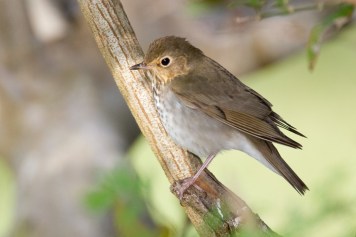
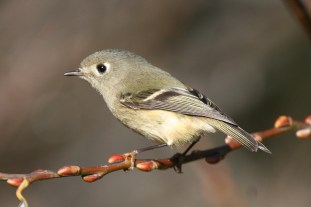
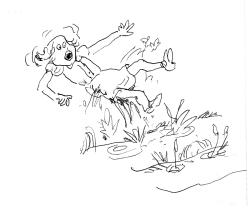 The slope was too steep to navigate on foot so I slid on my behind through what I would later discover was mostly poison oak. After an almost vertical slope of slippery clay, I found myself at the edge of a creek. And there was my bird, silent now, who fixed me with it’s round eye, made even rounder by a circle of white feathers. Late in the spring, the creek was reduced to a series of dark pools, laced together by threads of running water. Water striders skated across the surface while dragonflies darted about occasionally touching the water.

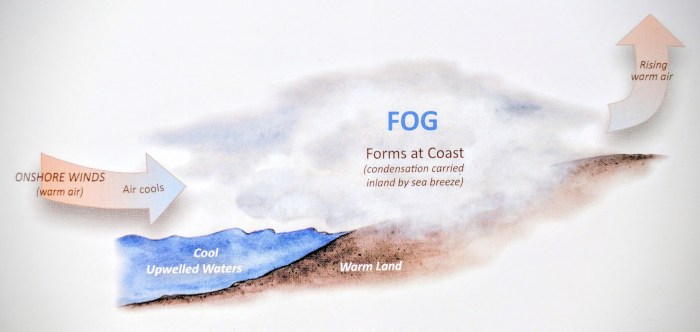


 decreasing coastal fogs when the Pacific High begins to slowly shift south allowing for the possibility of an early rain coming down from the north. Or when humidity sometimes moves north bringing the possibility of a thunderstorm and wonderful cloud effects. Exotic weather heightens one’s senses.
 I’m also reading about how coastal fogs along the north coast have allowed the redwood forest to persist. Once, when the climate was much wetter, redwoods were common over much of the continent. But as the climate became drier and cooler, the redwood forests retreated to a narrow band along the immediate coast of Northern California visited by ocean fogs in the summer.
 ering the Great Central Valley can blot out the sun for days on end until the next rain storm sweeps the fog away for a time. The so-called radiation fog often follows the rain when the earth is both chilled and damp and the drier air above it condenses, forming fog. I remember once driving across the Sacramento Valley at night and I could see that the fog came up to the cow’s belly, leaving its head in the clear.
 up to a hundred gallons a day.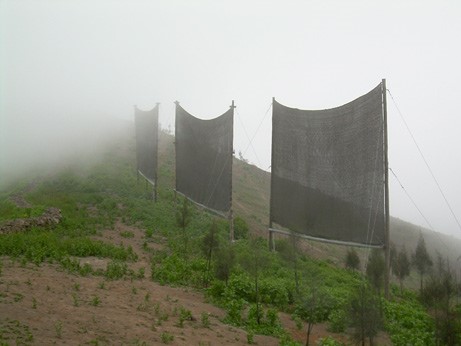
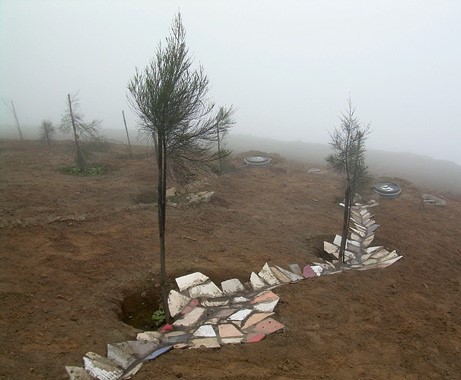 The newly-planted 700 tara trees will be able to eventually collect their own water. Tara trees produce valuable tannin.








 Phila Rogers